Monday, September 30, 2019
Air Force Flame Resistant Trouser Contract Awarded

Military Shoe Contract Awarded
Thursday, September 26, 2019
Marine Cold Weather Boot Contract Awarded
Wednesday, September 25, 2019
Cold Flyers Gloves Contract Awarded
U.S. Forest Service Flame Resistant Pants Contract Awarded
Tuesday, September 24, 2019
Wide Lapels and Cuffs = More Wool Fabric to Sell?

Customs Implements New Programs for Duty-Free de Minimis Shipments.
E-Commerce and Section 321 Shipments
Section 321(a)(2)(C) of the Tariff Act of 1930, as amended, authorizes CBP to provide an administrative exemption to admit free from duty and tax shipments of merchandise (other than bona fide gifts and certain personal and household goods) imported by one person on one day having an aggregate fair retail value in the country of shipment of not more than $800. This exemption is known as a de minimis entry. CBP has created Section 321 programs to enable the agency to monitor and protect against illegitimate trade while providing the public the benefits of duty free shipments for qualified imports.
To learn more about these programs, select program overview.
The Section 321 de minimis provision has attracted interest of late. On February 24, 2016, the Trade Enforcement and Trade Facilitation Act of 2015, Pub. L. 114-125, 130 Stat. 122 ("TFTEA"), was signed into law, which increased the de-minimis value exemption under 19 U.S.C. § 1321 from $200 to $800. Accordingly, beginning March 10, 2016, articles valued at $800 or less, which are imported by one person on one day, are eligible for duty free entry, under 19 U.S.C. § 1321(a)(2)(C). Because of this increase in value, merchants have expressed their desire to apply the de-minimis value exemption to withdrawals from FTZs. Specifically, bulk commercial merchandise shipped to the United States would be brought into the port limits and admitted into an FTZ. Once an e-Commerce purchase, valued at $800 or less is made, based on the aggregate purchase by a single customer on a single day, the merchants propose to enter the merchandise using weekly informal entry procedures pursuant to Section 321 of the Tariff Act of 1930, as amended (19 U.S.C. § 1321) and U.S. Customs and Border Protection ("CBP") Regulations: 19 C.F.R. §§ 10.151, 10.153, 143.21, and 143.23. In Binding Ruling H282601 of September 18, 2018, CBP responded to the American Apparel and Footwear Association, stating:
"Because the merchandise is imported in a bulk consolidated shipment valued at over $800 at importation, 19 C.F.R. § 10.153(d) prevents the goods from leaving the FTZ duty free under 19 C.F.R. § 10.151. Moreover, under Section 321, the $800 per day limit applies to the AAFA Members at the point of importation and not to the individual purchasers subsequent to importation. Accordingly, the shipments and transactions proposed by AAFA, valued over $800 at importation, do not qualify for duty-free treatment and informal entry under the administrative exception of Section 321."
With the rise of the de minimis to $800 we have seen more online retailers taking advantage of it. For example, Sears has a warehouse in Canada for de minimis shipments of apparel direct to consumers in the U.S. Customs has advised online retailers that they must be careful to follow the rules for Section 321, including the "single customer on a single day" provision.
Saturday, September 21, 2019
USTR Statement on the United States Deputy-Level Trade Talks with China
Thursday, September 19, 2019
USTR Announces More Exclusions from China 301 Tranche 3 and Set Uniform Date for Expiration
The exclusion are retroactive to September 24, 2018. Initially, USTR announced that exclusions would be in effect for one year from the date they are publication the Federal Register. This policy, however, would have resulted in disparities in the effective periods between exclusions granted early in the exclusion process and those granted later. Accordingly, the Trade Representative has amending the exclusion process so as to adopt a uniform expiration date for exclusions granted for the $200 billion trade action, subject to special circumstances. In particular, all exclusions from Tranche 3 will be effective from September 24, 2018, to August 7, 2020.
Here are the articles excluded from the action in the latest announcement--
(1) Chabazite zeolites having a silica-alumina ratio of 20:1 to 24:1, valued at $31 to $39 per kg (described in statistical reporting number 3824.99.3900)
(2) Cups of polypropylene, with a fluted wood paper filter fitted and affixed to the inside, measuring 44.1 mm in height, of a kind used to produce capsules for single-cup coffee brewing systems (described in statistical reporting number 3923.90.0080)
(3) Anti-electrostatic discharge mats, comprising a conductive rubber mat measuring 40 cm or more but not exceeding 60 cm in width, 80 or more but not exceeding 125 cm in length, and 2 mm in thickness, with integrated discharge points for a grounding wire clip or an anti-static wrist strap, such mats printed on the surface with measuring rules and technical reference data (described in statistical reporting number 4016.91.0000)
(4) O-rings, of nitrile rubber, ethylene propylene diene monomer (EPDM) rubber or fluoroelastomers (described in statistical reporting number 4016.93.1010)
(5) Dog harnesses and retractable dog leashes (described in statistical reporting number 4201.00.3000)
(6) Portable, single-use grills for heating food, each comprising bamboo charcoal fuel, expanded perlite insulation, bamboo rods for suspending foods over the charcoal flame, and cut paper or paperboard in shapes specially designed for assembly of a grill body (described in statistical reporting number 4402.10.0000)
(7) Laminated wood flooring panels having a hardwood veneer finished surface and a backing of pine strips or blocks, the panels having tongue-and-groove outer edges and being in thickness greater than 1.4 cm but not greater than 1.5 cm. (described in statistical reporting number 4412.99.5105)
(8) Rattan webbing, woven into decorative patterns (described in statistical reporting number 4601.93.0100)
(9) Paper pulp sponge blocks, measuring 38 cm by 38 cm by 102 cm (15 inches by 15 inches by 40 inches) (described in statistical reporting number 4823.70.0040)
(10) Woven microfiber fabric of 100 percent polyester, not exceeding 150/75 or 104/72 threads per inch, weighing 83 gram/m2 (described in statistical reporting number 5407.10.0010)
(11) Woven fabric sheeting of 65 percent polyester and 35 percent cotton, weighing less than 170g/ m2, not exceeding 45/45 or 110/76 threads per inch (described in statistical reporting number 5513.11.0040)
(12) Polyester or viscose fabric coated with polyurethane, the foregoing measuring 137 cm (54 inches) in width, and weighing 187 grams/m2 (described in statistical reporting number 5903.20.2500)
(13) Stainless steel mesh filters (described in statistical reporting number 7314.14.1000)
(14) Grills composed of steel wire, each measuring 49 cm by 47 cm (19.25 inches by 18.5 inches), weighing 0.36 kg (0.80 lbs.), designed as cooking surface of barbecue grill (described in statistical reporting number 7321.90.6090)
(15) Mounting boards of aluminum for guitar sound modifying (“effect”) devices, each consisting of an aluminum frame with above ground slots for the placement of devices and floor level slots for the on/off foot-operated pedal switches which control the modifying devices (described in statistical reporting number 7616.99.5190)
(16) Hand rails of tubular stainless steel, with wall connectors, of a length exceeding 300 mm but not exceeding 1.3 m (described in statistical reporting number 8302.41.6080)
(17) Stamped and formed latches of steel (described in statistical reporting number 8302.49.6085)
(18) Stamped and formed brackets of steel (described in statistical reporting number 8302.50.0000)
(19) Spark ignition reciprocating piston engines of a cylinder capacity exceeding 100 cc but not exceeding 250 cc, not exceeding 10.0 kW (described in statistical reporting number 8407.32.9040)
(20) Fuel pumps for internal combustion, spark ignition piston engines (described in statistical reporting number 8413.30.9030)
(21) Parts, of aluminum, iron or steel, for blowers other than fans of 8414.51 (described in statistical reporting number 8414.90.1080)
(22) Mouse input devices for automatic data processing (ADP) machines, each valued over $70 (described in statistical reporting number 8471.60.9050)
(23) Trackpad input units for automatic data processing (ADP) machines, each valued over $100 (described in statistical reporting number 8471.60.9050)
(24) Printed circuit assemblies to enhance the graphics performance of automatic data processing (ADP) machines (“accelerator modules”) (described in statistical reporting number 8473.30.1180)
(25) Printed circuit assemblies for rendering images onto computer screens (“graphics processing modules”) (described in statistical reporting number 8473.30.1180)
(26) Printed circuit assemblies, constituting unfinished logic boards (described in statistical reporting number 8473.30.1180)
(27) Parts and accessories of machines of heading 8471 not incorporating goods of headings 8541 or 8542 (described in statistical reporting number 8473.30.5100)
(28) Refrigerated and heated vending machines for dispensing live bait and fishing tackle, each machine weighing more than 350 kg (described in statistical reporting number 8476.81.0000)
(29) Power supplies suitable for physical incorporation into automatic data processing (ADP) machines or units thereof of heading 8471, each with a power output exceeding 500 W, measuring 148mm in length, 43 mm in width and 335 mm in height (described in statistical reporting number 8504.40.6018)
(30) Cold cathode electric neon discharge lamps, measuring 6.5 mm (1/4 inch) or less in diameter and 16 mm (5/8 inch ) or less in length (described in statistical reporting number 8539.39.9000)
(31) Guide pins and guide bolts designed for use in brakes and servo-brakes of subheading 8708.30 (described in statistical reporting number 8708.30.5090)
(32) Aluminum radiators for motor vehicles of headings 8701 to 8705 (other than for tractors suitable for agricultural use), measuring 50 cm or more but not exceeding 77 cm (20 inches to 30 inches) in width, 50 cm or more but not exceeding 77 cm (20 inches to 30 inches) in height, and 5 cm or more but not exceeding 11 cm (2 inches to 4 inches) in thickness, consisting of upper and lower tanks or side tanks welded to a center core (described in statistical reporting number 8708.91.5000)
(33) Single-speed bicycles having both wheels exceeding 63.5 cm in diameter, weighing less than 16.3 kg without accessories and not designed for use with tires having a cross-sectional diameter exceeding 4.13 cm (described in statistical reporting number 8712.00.2500)
(34) Tractor trailer skirts, consisting of panels designed to be attached to each side of a trailer, each with an upper section having a polyethylene core, steel layer and polyester finish coat and each lower section composed of thermoplastic vulcanite compound (described in statistical reporting number 8716.90.5060)
(35) Miniature lighting sets of a kind used for Christmas trees (described in statistical reporting number 9405.30.0010)
(36) LED light fixtures, of a kind used in horticulture, containing over 5,000 LEDs spread across 6 light bars (described in statistical reporting number 9405.40.8440)
(37) Garden, patio and table top wick burning torches for outdoor use (described in statistical reporting number 9405.50.4000)
(38) Lamp shades of fabric over metal frame (described in statistical reporting number 9405.99.4090)
AGOA TPLs Announced
Wednesday, September 18, 2019
Presidential Message to Congress Regarding the Notification of Initiation of United States–Japan Trade Agreement
On September 16, 2019, President Donald Trump notified Congress that he intends to enter into a trade agreement regarding tariff barriers with Japan under section 103(a)(2) of the Bipartisan Congressional Trade Priorities and Accountability Act of 2015 (Public Law 114-26, Title I).
On October 16, 2018, the President notified the Congress that he intended to initiate trade negotiations with Japan on a United States-Japan Trade Agreement. The Administration now proposes pursuing negotiations with Japan in stages and has reached an initial trade agreement regarding tariff barriers with Japan and intenda to enter into the agreement in the coming weeks.
USITC Reports on Dominican Republic 2-for-1 Program
On September 18, 2019, the U.S. International Trade Commission ("USITC") published Publication Number: 4950 Investigation Number: 332-503 Earned Import Allowance Program: Evaluation of the Effectiveness of the Program for Certain Apparel from the Dominican Republic.
The EIAP allows apparel manufacturers in the Dominican Republic who use U.S. fabric to produce certain apparel to earn a credit that can be used to ship eligible apparel made with non-U.S.-produced fabric into the United States duty free. The Dominican Republic-Central America-United States Free Trade Agreement Implementation Act, as amended, requires the USITC, an independent, nonpartisan, factfinding federal agency, to evaluate annually the effectiveness of the EIAP program and make recommendations for improvements.
The USITC's 10th and final annual review was submitted to the U.S. House of Representatives Committee on Ways and Means and the U.S. Senate Committee on Finance on September 17, 2019. Highlights of the report follow.
- Of the 13 registered firms, only four used the program in its final year, the same as the prior year.
- In 2018, U.S. imports of woven cotton bottoms from the Dominican Republic fell 4 percent by value to just under $1.4 million in 2018, down from $1.5 million in 2017, and fell 2 percent by quantity to 150,716 SMEs in 2018 from 153,679 SMEs in 2017. The continued decline in U.S. imports under the EIAP in its final year likely reflects a significant decline in woven trouser manufacturing capacity in the Dominican Republic, a simultaneous shift by U.S. importers to Asian suppliers during the life of the program, and anticipation of the expiration of the program on December 1, 2018. The general decline in the program’s usage after U.S. imports under the EIAP peaked in 2010 may also reflect the lack of changes made to the program despite the recommendations put forth since the first annual review.
- No new recommendations to improve the program were received during the 10th annual review of the EIAP, nor were there any known requests or efforts to extend the program beyond its expiration date. During the previous nine annual reviews, the government of the Dominican Republic, industry representatives, and users of the program consistently made three principal recommendations to improve the EIAP: 1) lower the 2-for-1 ratio of U.S. to foreign fabric to a 1-for-1 ratio; 2) expand the program coverage to enable other types of fabrics and apparel items to be included in the EIAP; and 3) change the requirement that dyeing and finishing of eligible fabrics occur in the United States.
Military Shelter Contract Awarded
Monday, September 16, 2019
Air Force Anti-G Suit Contract Awarded
Friday, September 13, 2019
ICE HSI San Francisco confiscates nearly $11K in fake merchandise at Raider-Alameda County Coliseum
Homeland Security Investigations warns consumers nationwide to beware of vendors who peddle counterfeit sports merchandise and tickets during NFL games.
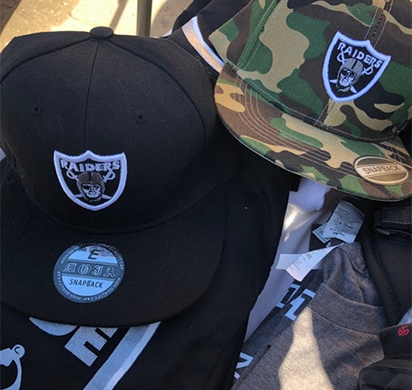
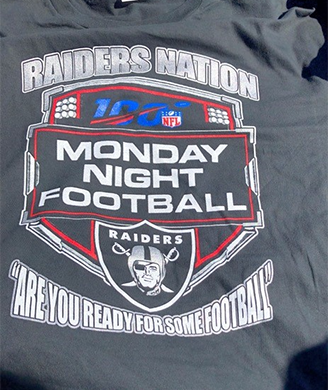
During Monday Night Football in Oakland, U.S. Immigration and Customs Enforcement’s (ICE) Homeland Security Investigations (HSI) San Francisco partnered with NFL brand security representatives and state and local law enforcement officers to prevent counterfeit sales.
Monday’s seizures are part of a larger trend the U.S. Department of Homeland Security has tracked throughout the country. The National Intellectual Property Rights Coordination Center (IPR Center) is reviewing an annual report on the number of IPR seizures that have raised the total estimated manufacturer’s suggested retail price of the seized goods – had they been genuine – to $1.4 billion.
“The lost revenue equals lost jobs and counterfeit materials typically contain substandard products and can also be a safety risk to the public,” King said.
Although counterfeiters are increasingly more sophisticated, fans can keep several key factors in mind when making purchases to avoid being victimized:
- Shop at authorized retail locations, such as the official team stores rather than buying items from street vendors, flea markets, online auctions or other questionable sources
- Buy tickets from authorized dealers
- Look out for ripped tags or irregular markings on apparel
- If the price seems too good to be true, it probably is. While some counterfeiters may attract fans with a low price tag or 2-for-1 deal, just as many try to legitimize their merchandise with a higher price point.
“Oakland Raiders fans attending the first game of the season deserve genuine products and the proceeds of counterfeit merchandise ends up in the hands of transnational criminal organizations engaged in varying types of illegal activities,” King added.
Purchasing authorized merchandise guarantees the quality and life of that souvenir, while also providing a reputable source for concerns, returns, and exchanges.
The HSI-led IPR Center is one of the U.S. government's key weapons in the fight against criminal counterfeiting and piracy. Working in close coordination with the Department of Justice Task Force on Intellectual Property, the IPR Center uses the expertise of its 25 member agencies to share information, develop initiatives, coordinate enforcement actions and conduct investigations related to intellectual property theft. Through this strategic interagency partnership, the IPR Center protects the public's health and safety and the U.S. economy.
Wednesday, September 11, 2019
Ragdoll & Rockets Recalls Children’s Loungewear Due to Violation of Federal Flammability Standard
Description: This recall involves five styles of children’s 100 percent micro polyester fleece sleepwear. The recalled sleepwear was sold in sizes 2 through 6 and S through XL. The recalled styles include a one-piece, hooded and footed children’s onesie, pants with waistband drawstring, shorts, long-sleeved crew top and, ‘Cozy Baby Onesie”.
The recalled loungewear was sold in the following sixteen prints: Big Stars, Elephant, Ghost Glow, Happy Feet, Hello Bunny, Kitty, Love Paws, Lush Dots, Moon and Stars, Owl, Panda, Pineapple, Polar Bear, Rainbow Glow, Snowman and Winter Deer. The loungewear styles have the following production codes on the care label inside the garment: L47/1705, LPJ/1806 or L47/1710.
Remedy: Consumers should immediately stop using the recalled loungewear, take it away from children and contact Ragdoll & Rockets for instructions on receiving a full refund.
Incidents/Injuries: None reported
Sold At: Sold exclusively at children’s boutiques nationwide and online at www.ragdollandrockets.com from May 2018 through May 2019 for between $16 and $28.
Distributor(s): Genexus dba Ragdoll & Rockets, of Gardena, Calif.
Manufactured In: China
Recall number: 19-204
Photos HERE.
Friday, September 6, 2019
DEFENSE SUPPLIER BASE: Challenges and Policy Considerations Regarding Offshoring and Foreign Investment Risks
The U.S. Department of Defense relies on a global network of suppliers to help meet its mission goals. This can mean contracting with U.S. companies that have accepted foreign investment or sent their operations offshore.
The Government Accountability Office convened a panel of experts who identified some benefits of DOD doing business with these companies—including saving money and increasing access to innovative technologies.
The panelists outlined some of the risks of relying on a globalized supply chain. Specifically:
- Intellectual property—Foreign investors in U.S. companies can get access to the sensitive technologies those companies develop. When those investors are from the nation’s strategic competitors (such as China or Russia), technology transfer is a concern.
- Domestic production—If the United States sends too much production abroad, the skills of the nation’s own workforce can erode.
- Source materials—DOD relies on foreign suppliers for parts and materials such as rare earth metals that are crucial to many weapon systems. Geopolitical conflicts can compromise access to foreign supplies to meet current and future needs.
Read the full report HERE.
Wednesday, September 4, 2019
CPSC Staff Attending the IPC E-Textiles 2019 Workshop
Tuesday, September 3, 2019
RH Recalls Turkish Robes Due to Violation of Federal Flammability Standard
Description: This recall involves RH’s adult, unisex “Ultra-Soft Turkish Robe” robes. The 100% cotton terry, long-sleeved robes have two front pockets and a belt. They were sold in black, dark gray, light gray, green and white, and in XS, S, M, L and XL sizes. The robes could be monogrammed. Made in Turkey, 100% cotton RN number 104581 and CA number 55697 are printed on the robe’s sewn-in side label.
: Consumers should immediately stop using the recalled robes and contact RH for a full refund of the purchase price.
Incidents/Injuries: RH has received three incident reports in the U.S. and one in Canada of the recalled robes igniting while consumers were operating a gas stove. No injuries have been reported.
Sold At: RH galleries, RH outlets and RH warehouse sales nationwide and online at www.rh.com from August 2018 through March 2019 for between $80 and $115.
Units: About 5,400 (in addition, about 300 were sold in Canada)
Importer(s): RH US LLC, of Corte Madera, Calif.
Manufactured In: Turkey
Recall number: 19-196