Thursday, July 26, 2018
My Turn: Michael McKeldon Woody: Trump is right to take on China
Rhode Island textile company CEO praises Trump's China trade actions ...READ MORE HERE

Wednesday, July 25, 2018
JCPenney Recalls Okie Dokie Denim Patches Shortie Shorts Due to Choking Hazard

Remedy: Consumers should immediately stop using the shorts and contact JCPenney for instructions on returning the shorts for a full refund in the form of a JCPenney gift card. Incidents/Injuries: None reported.
Sold Exclusively At: JCPenney stores nationwide and online at www.jcpenney.com from February 2018 through June 2018 for about $22.
Importer(s): J.C. Penney Corporation Inc., of Plano, Texas
Distributor(s): J.C. Penney Corporation Inc., of Plano, Texas
Manufactured In: China
Recall number: 18-192
Tuesday, July 24, 2018
Section 301 Import Duties Q & A
Q. Are products of Hong Kong subject to the additional Section 301 duties?
A. At this time, the additional duties imposed by the Section 301 remedy only apply to articles that are products of the People’s Republic of China (ISO Country Code CN). Imported goods that are legitimately the product of Hong Kong (HK) or Macau (MO) are not subject to the additional Section 301 duties. Please note that Section 301 duties are based on country of origin, not country of export.
Q. Are Section 301 duties eligible for drawback?
A. Section 301 duties are eligible for duty drawback.
Q. How are goods subject to the Section 301 duties treated when they are admitted into a foreign trade zone (FTZ)?
A. Per the Federal Register Notice published by the USTR, any product covered by the Section 301 remedy (except any product that is eligible for admission under ‘domestic status’ as defined in 19 CFR 146.43) which is subject to the additional duty imposed and that is admitted into a U.S. foreign trade zone on or after 12:01 am EST on July 6, 2018, only may be admitted as ‘privileged foreign status’ as defined in 19 CFR 146.41. Such products will be subject upon entry for consumption to any ad valorem rates of duty or quantitative limitations related to the classification under the applicable HTSUS subheading. At this time, products covered by the Section 301 remedy that were admitted as “privileged foreign status” prior to July 6, 2018, will not be subject to the additional duties; products admitted on or after July 6, 2018, may only be admitted as “privileged foreign status,” unless eligible for admission under “domestic status.”
Q. Are products entered under the Section 321 de minimis exemption subject to Section 301 duties?
A. No, goods properly entered under Section 321 are not subject to Section 301 duties. Please note that a formal entry is required if a shipment contains merchandise subject to AD/CVD. Goods subject to AD/CVD do not qualify for Section 321.
Monday, July 23, 2018
Wool on Proposed List for 10% Tariff on Chinese Goods
The U.S. recently announced proposed additional import tariffs, at the rate of 10%, on thousands of classifications of goods of Chinese origin, including wool fiber, yarn, and fabric.
The Office of the U.S. Trade Representative is accepting public comments on the proposal. Specifically USTR wants to hear from you regarding the specific tariff subheadings to be subject to increased duties whether:
- they should be removed from the list;
- they should stay on the list at 10%; or
- they should stay on the list but at a lower or higher rate.
Comments are due by August 17th and must address specific 8-digit tariff subheadings. Agathon Associates can assist U.S. companies in drafting and filing comments. NOTE that good arguments can be made for remove some of the wool fiber classifications from the list and for additional duty of at least 25%, and as high as 68.5%, on some of the wool textile classifications. Due to the complexity of matching the specific tariff subheadings with the products of interest to individual companies submitting comments I strongly urge interested companies to begin the process as soon as possible.
New 10% on Chinese Fabrics May Affect U.S. Upholstery Fabric Industry
The U.S. recently announced proposed additional import tariffs, at the rate of 10%, on thousands of classifications of goods of Chinese origin, including upholstery fabrics.
The Office of the U.S. Trade Representative is accepting public comments on the proposal. Specifically USTR wants to hear from you regarding the specific tariff subheadings to be subject to increased duties whether:
- they should be removed from the list;
- they should stay on the list at 10%; or
- they should stay on the list but at a lower or higher rate.
A strong case can be made that upholstery fabrics should stay on the list, and at a higher than 10% rate. The reason for this is the legal basis for the tariffs. Here I need to give a mini civics lesson. The Constitution is clear in Article 1 Section 8 that it is Congress, not the President, which has the power to impose import duties, so how is it possible that the President, in this case appears to be acting unilaterally? The answer is that Congress has delegated to the President limited authority to adjust import duties. One such delegation is Section 301 of the Trade Act of 1974 which authorizes the President to take all appropriate action, including retaliation, to obtain the removal of any act, policy, or practice of a foreign government that violates an international trade agreement or is unjustified, unreasonable, or discriminatory, and that burdens or restricts U.S. commerce. In this case the justification for "Section 301" tariffs is China's intellectual property rights violations. For U.S. upholstery fabrics manufacturers intellectual property -- copyrighted designs and proprietary finishes -- is an important part of how they successfully compete and is, also, reported to be frequently illegally "knocked off" in China. Therefore, there is direct, and compelling connection between harm done to U.S. upholstery fabric manufacturers and the legal basis for the Section 301 tariffs.
Comments are due by August 17th and must address specific 8-digit tariff subheadings. Agathon Associates can assist U.S. companies in drafting and filing comments. While the case for upholstery on the list is compelling, the story will take some effort to tell due to the fact that the tariff schedule does not differentiate upholstery fabric from other fabrics. However, using such factors as weight, construction, and the presence of back-coating, we can construct an approximation. Due to the complexity of matching the specific tariff subheadings with the products of interest to individual companies submitting comments I strongly urge interested companies to begin the process as soon as possible. I have already been approached by individual upholstery manufacturers to assist in drafting and filing comments. The more companies that join in this effort the strong the response to the U.S. government will be and the cost can be spread over more individual companies.
Sunday, July 22, 2018
Proposed U.S. China 301 Tariffs May Affect the Flock Industry
The U.S. recently announced proposed additional import tariffs, at the rate of 10%, on thousands of classifications of goods of Chinese origin, including inputs to the U.S. flock industry and imported flock and flocked articles.
The Office of the U.S. Trade Representative is accepting public comments on the proposal. Specifically USTR wants to hear from you regarding the specific tariff subheadings to be subject to increased duties whether:
- they should be removed from the list;
- they should stay on the list at 10%; or
- they should stay on the list but at a lower or higher rate.
Comments are due by August 17th and must address specific 8-digit tariff subheadings. Agathon Associates can assist U.S. companies in drafting and filing comments. Due to the complexity of matching the specific tariff subheadings with the products of interest to individual companies submitting comments I strongly urge interested companies to begin the process as soon as possible.
The list includes the following classifications of interest to the flock industry:
- 4811.90.20 Paper, paperboard, cellulose wadding and webs of cellulose fibers: In strips or rolls of a width exceeding 15 cm or in rectangular (including square) sheets with one side exceeding 36 cm and the other side exceeding 15 cm in the unfolded state: Wholly or partly covered with flock, gelatin, metal or metal solutions.
- 5501.10.00 Synthetic filament tow of nylon or other polyamides.
- 5501.20.00 Synthetic filament tow of polyesters.
- 5501.30.00 Synthetic filament tow of acrylic or modacrylic.
- 5501.40.00 Synthetic filament tow, of polypropylene.
- 5501.90.01 Synthetic filament tow, other.
- 5502.10.00 Artificial filament tow of cellulose acetate.
- 5502.90.00 Artificial filament tow, other than of cellulose acetate (such as rayon).
- 5601.30.00 Textile flock.
- 5907.00.60 Fabric of man-made fibers, impregnated, coated or covered (including covered with flock).
- 5907.00.80 Fabric, other than of man-made fibers, impregnated, coated or covered (including covered with flock).
U.S. Seeks Industry Comments Proposed 10% Import Duty on Hats from China
The U.S. recently announced proposed additional import tariffs, at the rate of 10%, on thousands of classifications of goods of Chinese origin, including hats.
The Office of the U.S. Trade Representative is accepting public comments on the proposal. Specifically USTR wants to hear from you regarding the specific tariff subheadings to be subject to increased duties whether:
- they should be removed from the list;
- they should stay on the list at 10%; or
- they should stay on the list but at a lower or higher rate.
Comments are due by August 17th and must address specific 8-digit tariff subheadings. Agathon Associates can assist U.S. companies in drafting and filing comments. Due to the complexity of matching the specific tariff subheadings with the products of interest to individual companies submitting comments I strongly urge interested companies to begin the process as soon as possible.
The list includes the following classifications of headgear:
- 6501.00.30 Hat forms, hat bodies and hoods, not blocked to shape or with made brims; plateaux & manchons; all of fur felt, for men or boys.
- 6501.00.60 Hat forms, hat bodies and hoods, not blocked to shape or with made brims; plateaux & manchons; all of fur felt, not for men or boys.
- 6501.00.90 Hat forms, hat bodies and hoods, not blocked to shape or with made brims; plateaux & manchons; all of felt, other than fur felt.
- 6502.00.20 Hat shapes, plaited or assembled from strips, not blocked/ lined/trimmed & w/o made brims, of veg. fibers or materials, or paper yarn, sewed.
- 6502.00.40 Hat shapes, plaited or assembled from strips, not blocked, not lined, not trimmed & without made brims, of vegetable fibers or materials, not sewed/bleached/colored.
- 6502.00.60 Hat shapes, plaited or assembled from strips, not blocked, not lined, not trimmed & without made brims, of vegetable fibers or materials, not sewed but bleached/colored.
- 6502.00.90 Hat shapes, plaited or assembled from strips, not blocked, not lined, not trimmed & without made brims, not vegetable fibers or vegetable materials, nesoi.
- 6504.00.30 Hats and headgear, plaited or assembled from strips of vegetable fibers or unspun fibrous vegetable materials and/or paper yarn, sewed.
- 6504.00.60 Hats and headgear, plaited or assembled from strips of vegetable fibers or unspun fibrous vegetable materials and/or paper yarn, not sewed.
- 6504.00.90 Hats and headgear, plaited or assembled from strips of any material (other than vegetable fibers/unspun fibrous veg. materials and/or paper yarn).
- 6505.00.01 Hair-nets of any material, whether or not lined or trimmed.
- 6505.00.04 Hats and headgear of fur felt made from hat forms and hat bodies of 6501.
- 6505.00.08 Hats and headgear made from hat forms and hat bodies of 6501, except of fur felt.
- 6505.00.15 Hats and headgear, of cotton and/or flax, knitted.
- 6505.00.20 Headwear, of cotton, not knitted; certified hand-loomed and folklore hats & headgear, of cotton or flax, not knitted.
- 6505.00.25 Hats and headgear, of cotton or flax, not knitted, not certified hand-loomed folklore goods.
- 6505.00.30 Hats and headgear, of wool, knitted or crocheted or made up from knitted or crocheted fabric.
- 6505.00.40 Hats and headgear, of wool, made up from felt or of textile material, not knitted or crocheted or made up from knitted or crocheted fabric.
- 6505.00.50 Hats and headgear, of man-made fibers, knitted or crocheted or made up from knitted or crocheted fabric, wholly or in part of braid.
- 6505.00.60 Hats and headgear, of man-made fibers, knitted or crocheted or made up from knitted or crocheted fabrics, not in part of braid.
- 6505.00.70 Hats and headgear, of man-made fibers, made up from felt or of textile material, not knitted or crocheted, wholly or in part braid.
- 6505.00.80 Hats and headgear, of man-made fibers, made up from felt or of textile material, not knitted or crocheted, not in part of braid.
- 6505.00.90 Hats and headgear, of textile materials (other than of cotton, flax, wool or man-made fibers), nesoi.
- 6506.10.30 Safety headgear of reinforced or laminated plastics, whether or not lined or trimmed.
- 6506.10.60 Safety headgear, other than of reinforced or laminated plastics, whether or not lined or trimmed.
- 6506.91.00 Headgear (other than safety headgear), nesoi, of rubber or plastics, whether or not lined or trimmed.
- 6506.99.30 Headgear, nesoi, of furskin, whether or not lined or trimmed.
- 6506.99.60 Headgear (other than safety headgear), nesoi, of materials other than rubber, plastics, or furskins, whether or not lined or trimmed.
- 6507.00.00 Headbands, linings, covers, hat foundations, hat frames, peaks (visors) and chinstraps, for headgear.
Saturday, July 21, 2018
Maine Dye & Textiles Seeks to Build the New England Manufacturing Sector through Crowd Funding Effort
Maine Dye & Textiles is a U.S. textile manufacturing business located in Saco Maine. They began operation in 2012 with yarn dyeing services for textile end producers selling into the natural fiber - artisan and craft markets. In 2016, thye expanded and added a synthetic division (package dyeing) for companies using yarn and thread for commercial production in such areas as rope and cordage. Their focus is on small to mid-scale production; environmental improvements; and the continued development of technical expertise. Currently, they operate one shift daily and a small but well-trained staff for production averaging 18 to 20 tons a month. With the substantial investments made in 2016 in new dye equipment and color technology, they are positioned to expand services, have the market demand to do so and are interested in acquiring outside investors. Expansion will involve moving to 3 shifts within 24 months and a resulting 50% increase in job growth for the area. The Dyehouse is organically certified and approved as a USDA Rural Energy project.
To participate in this investment opportunity supporting U.S. manufacturing, job growth and access to production resources, visit the Project at: https://growthfountain.com/dyehousebuildout
Domestic textile manufacturing supports 229,000 jobs, is globally competitive in niche markets with exports increasing 31% over the last 6 years.
Thursday, July 19, 2018
US Proposes 10% Tariff on Chinese Textiles, Industry Comments Welcomed
The U.S. recently announced proposed additional import tariffs, at the rate of 10%, on thousands of classifications of goods of Chinese origin. The list appears to include all, are nearly all of the classifications for fiber, yarn, fabric, and carpet (Harmonized Tariff Schedule Chapters 50 through 60).
The Office of the U.S. Trade Representative is accepting public comments on the proposal. Specifically USTR wants to hear from you regarding the specific tariff subheadings to be subject to increased duties whether:
- they should be removed from the list;
- they should stay on the list at 10%; or
- they should stay on the list but at a lower or higher rate.
Comments are due by August 17th and must address specific 8-digit tariff subheadings. Agathon Associates can assist U.S. companies in drafting and filing comments. Due to the complexity of matching the specific tariff subheadings with the products of interest to individual companies submitting comments I strongly urge interested companies to begin the process as soon as possible.
BACKGROUND
On July 17, 2018, the Office of the United States Trade Representative published in the Federal Register (83 FR 33608) Request for Comments Concerning Proposed Modification of Action Pursuant to Section 301: China’s Acts, Policies, and Practices Related to Technology Transfer, Intellectual Property, and Innovation.
On June 20, 2018 (83 FR 28710), the U.S. Trade Representative (Trade Representative) provided notice of an initial action in the Section 301 investigation of the acts, policies, and practices of the Government of China related to technology transfer, intellectual property, and innovation. The initial action was the imposition of an additional 25 percent ad valorem duty on products of China with an annual trade value of approximately $34 billion, effective July 6, 2018. The June 20 notice also sought public comment on another proposed action, in the form of an additional 25 percent ad valorem duty on products of China with an annual trade value of approximately $16 billion. The public comment process in connection with the proposed additional action is ongoing. On July 6, 2018, China responded to the initial action by imposing increased duties on goods of the United States. In light of China's decision to respond to the investigation by imposing duties on U.S. goods, the Trade Representative proposes a modification of the action taken in this investigation. The proposed modification is to maintain the original $34 billion action and the proposed $16 billion action, and to take further action in the form of an additional 10 percent ad valorem duty on products of China with an annual trade value of approximately $200 billion. The products subject to this proposed supplemental action are classified in the HTSUS subheadings set out in the Annex to this notice. The Office of the U.S. Trade Representative (USTR) is seeking public comment and will hold a public hearing regarding this proposed modification of the action in the investigation.
Wednesday, July 18, 2018
Made in America Day and Made in America Week, 2018
By the President of the United States of America
A Proclamation
On Made in America Day and during Made in America Week, we celebrate the importance of American manufacturing, construction, agriculture, mining, and entrepreneurship to our Nation's prosperity and economic vitality. Made in America products represent the global gold standard for quality, innovation, and craftsmanship and the output of a highly skilled workforce that is second to none.
American workers and job creators sustain and inspire the American Dream, while enhancing both our economic and national security, which are inextricably linked.
For far too long, the working men and women of our country have been ignored. That era is over.
Last year, I signed into law historic tax cuts and reform, which have unleashed a flow of investment and jobs back into America from overseas. Optimism among American manufacturers has hit all-time highs as American businesses across the country have paid bonuses, increased wages, and boosted contributions to employee retirement plans.
My Administration is also delivering on its promise to cut unnecessary and burdensome regulations that hamper economic growth.
I have consistently pledged to the American people that I will reinvigorate our workforce by instituting fair and reciprocal trade practices so that companies can compete, thrive, and grow. My trade agenda is focused on defending our workers and businesses from unfair trade practices and on removing barriers to our products and services, so that our Nation can compete and so that ``buy American and hire American'' once again becomes the best option in an increasingly international and competitive market. Accordingly, I will continue to negotiate and modernize our trade agreements to bring about free, fair, and reciprocal trade and thereby ensure open, fair, and competitive markets for America's products and services.
Our Nation continues to thrive due to the determination, imagination, skill, creativity, and excellence of our people. American industry reflects these qualities and evokes patriotism, pride, and the hope of a bright and prosperous future. We salute our Nation's workers, job creators, and inventors, and we pledge to continue creating an environment that makes the United States the most attractive place in the world to do business.
NOW, THEREFORE, I, DONALD J. TRUMP, President of the United States of America, by virtue of the authority vested in me by the Constitution and the laws of the United States, do hereby proclaim July 17, 2018, as Made in America Day and this week, July 15 through July 21, 2018, as Made in America Week. I call upon all Americans to pay special tribute to the builders, the ranchers, the crafters, the entrepreneurs, and all those who work with their hands every day to make America great.
IN WITNESS WHEREOF, I have hereunto set my hand this thirteenth day of July, in the year of our Lord two thousand eighteen, and of the Independence of the United States of America the two hundred and forty-third.
(Presidential Sig.)
Monday, July 16, 2018
ICE seizes 181,000 counterfeit items worth nearly $43 million in Laredo, Texas
Special agents with U.S. Immigration and Customs Enforcement’s (ICE) Homeland Security Investigation (HSI) on July 3rd completed counting the counterfeit items seized in Laredo in June which totaled more than 181,000 items. HSI estimates the street value of the seized items at more than $42.9 million, which is HSI’s largest counterfeit seizure in Laredo.
In mid-June 2018, HSI special agents conducted surveillance over a three-day period and observed boxes containing suspected counterfeit merchandise being moved. During the enforcement action, HSI discovered that all shipping labels on all the boxes depicted fictitious delivery addresses in Laredo. HSI confirmed the boxes contained counterfeit merchandise and detained the boxes. HSI eventually seized 795 boxes containing 181,615 pieces of trademark-infringed merchandise, which included many counterfeited brands, such as the following names: Adidas, Apple, Calvin Klein, Casio, Chanel, Coach, Diesel, Fendi, Gucci, Hugo Boss, LG, Luis Vuitton, Mark Kors, Nike, Rolex, Samsung, Sony, Under Armor, Yves St. Laurent; and DC and Marvel Comics. Through its investigation, HSI discovered that the Laredo-based criminal organization was the same organization that agents identified from a separate May 2018 counterfeit merchandise seizure. During the May 2018 seizure, HSI seized $16.1 million in trademark infringed merchandise which was destined for illegal export to Mexico.
Taken together, the two seizures represent $59 million in seized counterfeit merchandise, more than 260,000 pieces of garments, consumer electronics, cosmetics and jewelry.
Allura Recalls Children’s Sleepwear Due to Violation of Federal Flammability Standard
Description:
This recall involves two styles of children’s sleepwear garments. The first garment is a 100% polyester fleece pajama pant with the brand name “Sweet N Sassy” on the waist label and hang tag. The style number is located on the back of the brand label at the center waist. The second garment is a 95% polyester and 5% spandex onesie with long-sleeves, a hood and front zipper with the brand name “Delia’s Girl” at the neck label and hang tag. The style number is located on the back of the brand label at the neck. The garments were sold in children’s sizes 4-6x and 7-16 in a variety of colors and prints.
| Style Number | Style Description | Image |
|---|---|---|
| S65300 or S67300 | 4/6X or 7/16 Black/Pink thermal onesie w/sherpa hood love print | 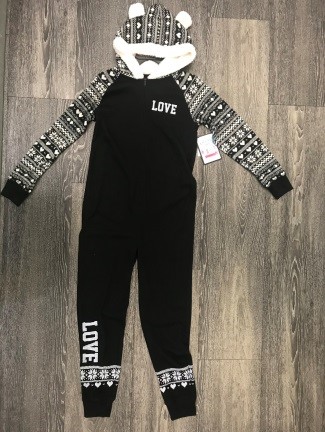 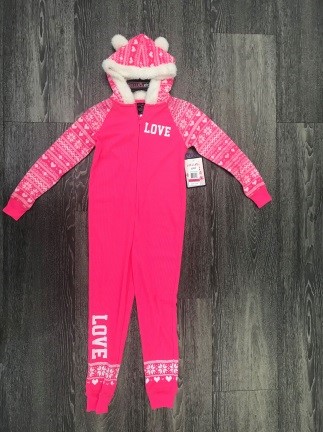 |
| S65301 or S67301 | 4/6X or 7/16 Pink/Tan thermal onesie w/sherpa hood animal print | 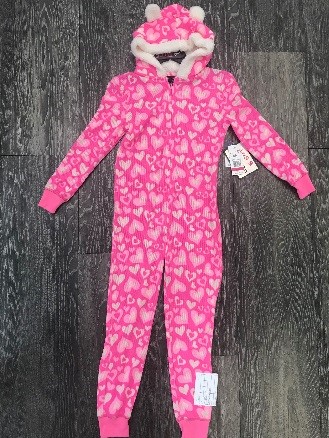 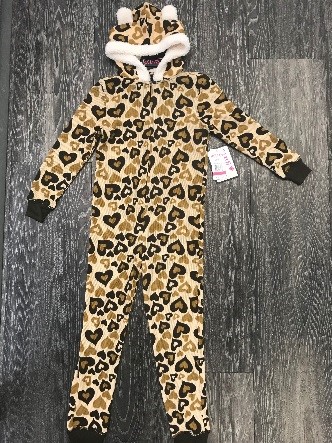 |
| S65302 or S67302 | 4/6X or 7/16 Gray/Cream thermal onesie w/Sherpa hood dream print | 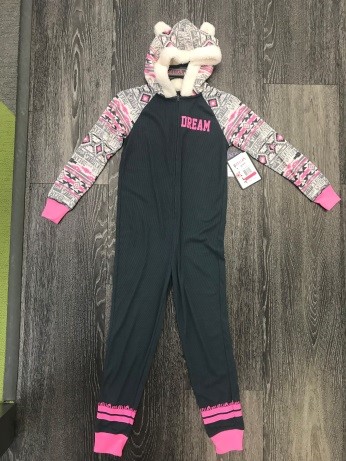 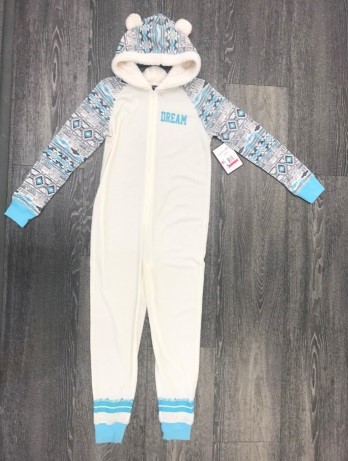 |
| S65303 or S67303 | 4/6X or 7/16 Pink/Black thermal onesie w/Sherpa hood fairisle print | 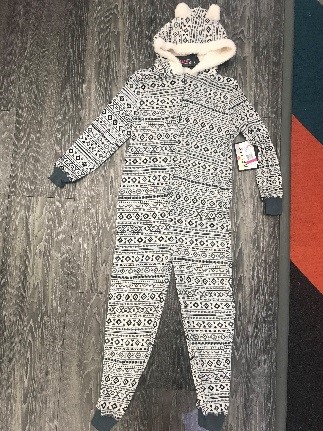 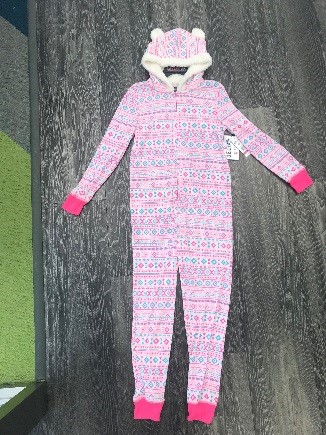 |
| 65477 or 67477 | 4/6X or 7/16 pink fleece pant with feather print | 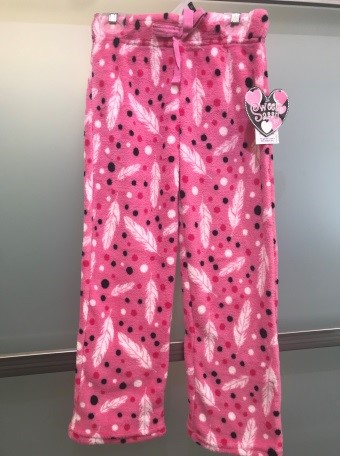 |
| 65477 or 67477 | 4/6X or 7/16 mint fleece pant with feather print | 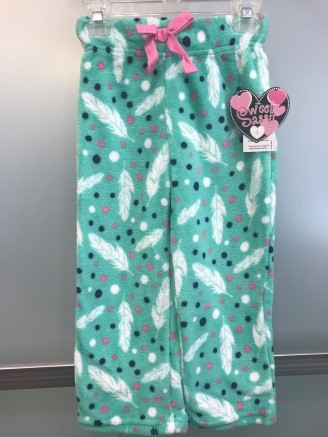 |
| 65477 or 67477 | 4/6X or 7/16 gray/pink fleece pant with animal print | 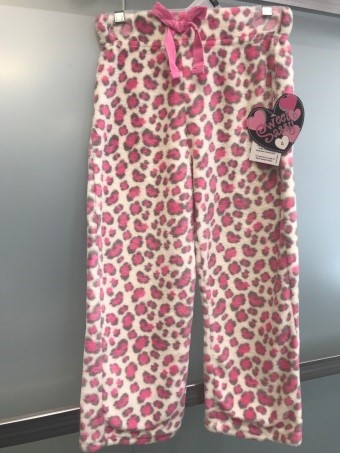 |
| 65477 or 67477 | 4/6X or 7/16 brown/tan fleece pant with animal print | 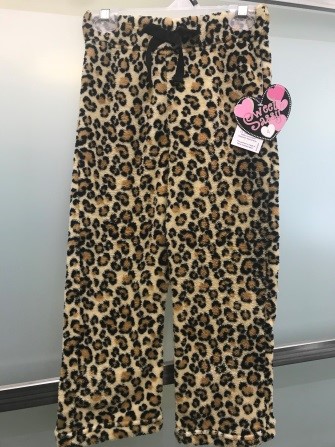 |
| 65477 or 67477 | 4/6X or 7/16 pink fleece pant with penguin print | 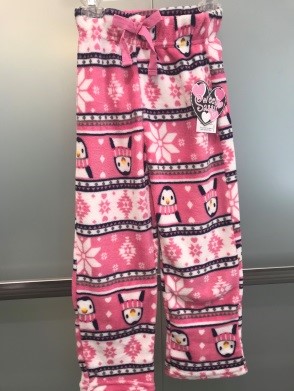 |
| 65477 or 67477 | 4/6X or 7/16 coral fleece pant with penguin print | 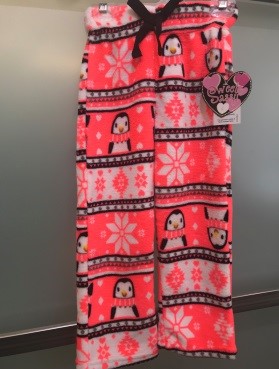 |
| 65476 or 67476 | 4/6X or 7/16 pink/gray fleece pant with plaid print | 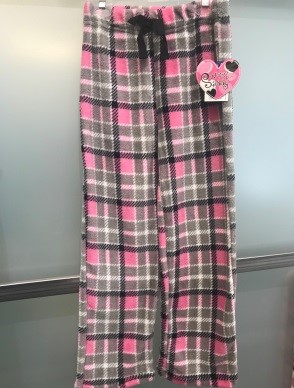 |
| 65476 or 67476 | 4/6X or 7/16 gray/turk fleece pant with plaid print | 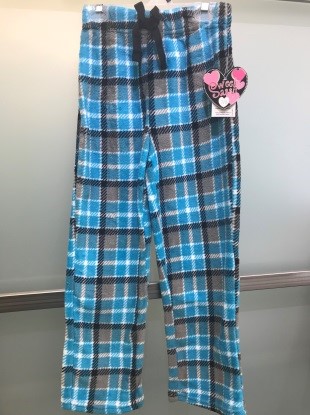 |
| 65476 or 67476 | 4/6X or 7/16 white fleece pant with verbiage print | 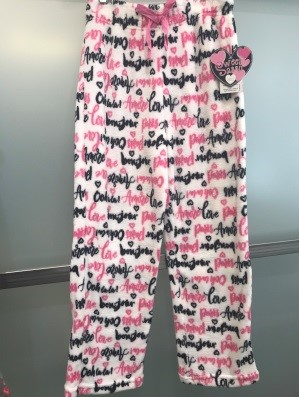 |
| 65476 or 67476 | 4/6X or 7/16 charcoal fleece pant with verbiage print | 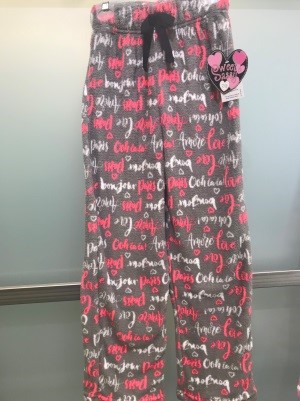 |
| 65476 or 67476 | 4/6X or 7/16 pink fleece pant with star print | 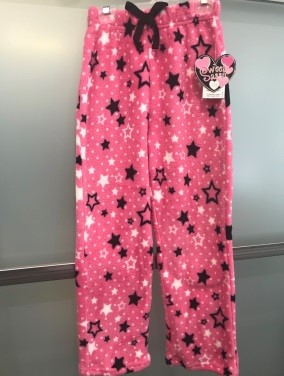 |
| 65476 or 67476 | 4/6X or 7/16 white fleece pant with star print | 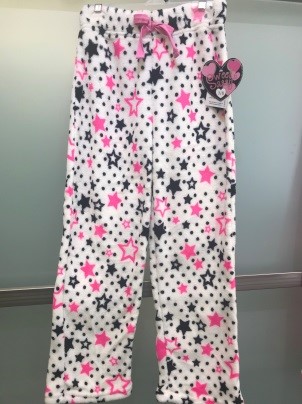 |
| 65475 or 67475 | 4/6X or 7/16 white/black fleece pant with Aztec print | 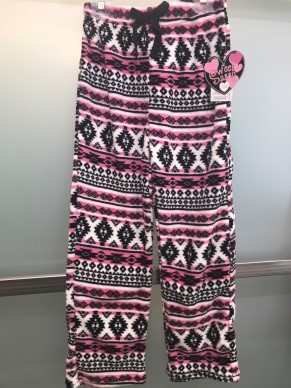 |
| 65475 or 67475 | 4/6X or 7/16 pink/gray fleece pant with Aztec print | 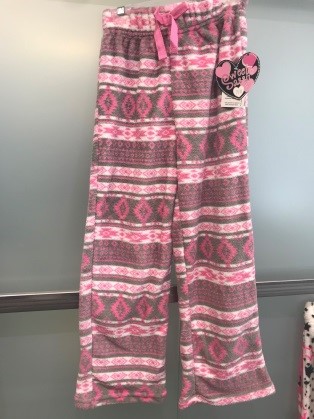 |
| 65475 or 67475 | 4/6X or 7/16 turk fleece pant with fox print | 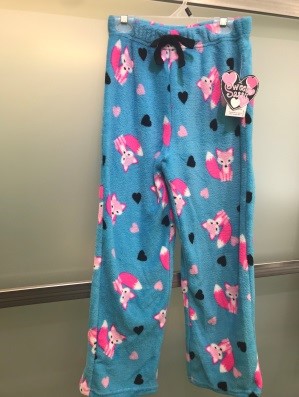 |
| 65475 or 67475 | 4/6X or 7/16 navy fleece pant with fox print | 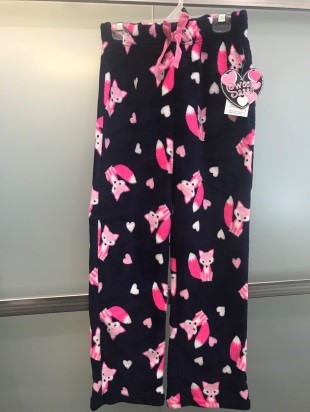 |
| 65475 or 67475 | 4/6X or 7/16 pink fleece pant with heart print | 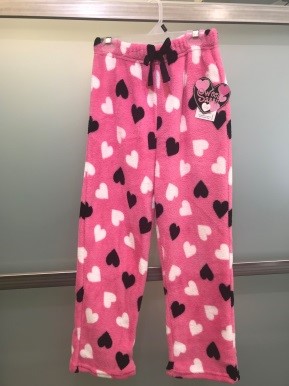 |
| 65475 or 67475 | 4/6X or 7/16 gray fleece pant with heart print | 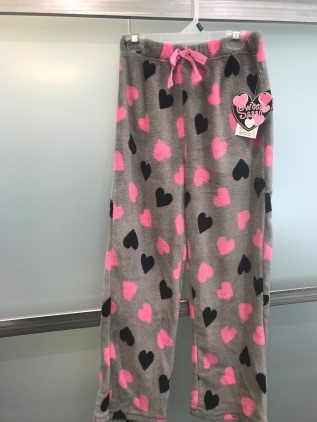 |
Remedy:
Consumers should immediately stop using the recalled sleepwear, take it away from children and contact Allura for a full refund.
Incidents/Injuries:
None reported
Sold At:
America’s Kids, Boscov’s, Kids For Less and other stores nationwide and online at Amazon.com, CookiesKids.com, CrazyforBargains.com, Sophiasstyle.com and other websites from September 2017 to April 2018 for between $8 and $13.
Importer(s):
Allura Imports, of New York
Distributor(s):
Allura Imports, of New York
U.S. Proposes 10% Additional Tariff on Chinese Fiber, Yarn, and Fabric
On July 6, 2018, in response to unfair Chinese practices, the United States began imposing tariffs of 25 percent on approximately $34 billion worth of Chinese imports. These tariffs will eventually cover up to $50 billion in Chinese imports as legal processes conclude. The products targeted by the tariffs are those that benefit from China’s industrial policy and forced technology transfer practices.
China has since retaliated against the United States by imposing tariffs on $34 billion in U.S. exports to China, and threatening tariffs on another $16 billion. The U.S. claims that China did this without any international legal basis or justification. As a result of China’s retaliation and failure to change its practices, the President has ordered USTR to begin the process of imposing tariffs of 10 percent on an additional $200 billion of Chinese imports. The U.S. maintains that this is an appropriate response under the authority of Section 301 to obtain the elimination of China’s harmful industrial policies. This latest list includes just about every textile fiber, yarn, fabric, and carpet (but not apparel or home textiles).
Learn how to do business in the Caribbean Region and comply with the Foreign Corrupt Practices Act.
The Foreign Corrupt Practices Act of 1977, was enacted for the purpose of making it unlawful for certain classes of persons and entities to make payments to foreign government officials to assist in obtaining or retaining business.
Since 1977, the anti-bribery provisions of the FCPA have applied to all U.S. persons and certain foreign issuers of securities. With the enactment of certain amendments in 1998, the anti-bribery provisions of the FCPA now also apply to foreign firms and persons who cause, directly or through agents, an act in furtherance of such a corrupt payment to take place within the territory of the United States.
The U.S. Commercial Service is offer a webinar "Foreign Corrupt Practices Act (FCPA) and its effect on doing business in the Caribbean on August 22nd, 2018.
Register at https://emenuapps.ita.doc.gov/ePublic/event/editWebReg.do?SmartCode=8QFQ
Saturday, July 14, 2018
Marine Corps Tent Contract Awarded
Litefighter Systems LLC, Roswell, Georgia, has been awarded a maximum $10,627,440 firm-fixed-priced, indefinite-delivery/indefinite-quantity contract for combat tents. This was a competitive acquisition with three responses received. This is a one-year base contract with four one-year option periods. Locations of performance are Mississippi and Georgia, with a July 12, 2023, performance completion date. Using military service is Marine Corps. Type of appropriation is fiscal 2018 through 2023 defense working capital funds. The contracting activity is the Defense Logistics Agency Troop Support, Philadelphia, Pennsylvania (SPE1C1-18-D-1065).
Friday, July 13, 2018
The Commercial Customs Operations Advisory Committee (COAC) will hold its public meeting on Wednesday, August 1, 2018 via webinar.
Agenda
1. The Exports Subcommittee will discuss a path forward for its work and the work of the Export Manifest Working Group for the 15th Term COAC. There will also be an update on the automated export manifest pilots, and on progress in implementing a post-departure filing pilot as part of the ocean pilot.
2. The Trusted Trader Subcommittee will present an update from the C-TPAT Minimum Security Criteria Working Group on its recommendation regarding CBP's plans to roll out new C-TPAT criteria. The subcommittee will also provide an update on the progress on the Trusted Trader Strategy and the formation of a new Trade Compliance Working Group.
3. The Trade Modernization Subcommittee will discuss the progress of the Regulatory Reform Working Group’s efforts to identify and prioritize areas of regulations administered by CBP which can be reformed and the Foreign Trade Zone Regulations Working Group. In addition, the subcommittee will discuss the progress being made in the E-Commerce Working Group.
4. The Trade Enforcement and Revenue Collection (TERC) Subcommittee will provide updates from the Anti-Dumping/Countervailing Duties (AD/CVD), Bond, Forced Labor and Intellectual Property Rights Working Groups and will also speak to the lessons learned from the risk-based bonding tabletop exercise.
Federal Prison Industries Awarded Army Uniform Contract
Federal Prison Industries, Washington, District of Columbia, doing business as UNICOR, has been awarded a maximum $14,062,500 indefinite-delivery/indefinite-quantity contract for Army physical fitness uniform trunks. This is a one-year base contract with two one-year option periods. This was a competitive acquisition with nine responses received. Locations of performance are Minnesota, Louisiana, Colorado, Kentucky and Washington, District of Columbia, with a July 11, 2019, performance completion date. Using military service is Army. Type of appropriation is fiscal 2018 through 2019 defense working capital funds. The contracting activity is the Defense Logistics Agency Troop Support, Philadelphia, Pennsylvania (SPE1C1-18-D-1069).
Thursday, July 12, 2018
NCTO Applauds Trump Administration Efforts to Address China’s Unfair Trade Practices
The National Council of Textile Organizations (NCTO) applauds the Trump administration for its continued effort to resolve longstanding trade inequities with China, noting the July 10 announcement proposing $200 billion in Chinese goods for an added 10 percent tariff. The latest U.S. action follows China’s unjustified retaliation against U.S. imports after the United States placed Section 301 tariffs on Chinese goods in response to that country’s unfair trade practices related to the forced transfer of American technology and intellectual property.
NCTO also called on the Trump administration to include finished textile and apparel products on any future lists of imports from China to be made subject to Section 301 tariffs.
“The Trump administration is right to confront China’s unfair trade practices. Section 301 tariffs show the world that countries who cheat the United States on trade will be held accountable,” said NCTO President & CEO Auggie Tantillo. That said, NCTO will be thoroughly vetting the new retaliation list. “With the inclusion of virtually all fiber, yarn and fabric tariff lines, NCTO’s response will be on a line-by-line basis, with support or opposition to individual lines dependent on the how the competitiveness of the U.S. textile industry is impacted,” Tantillo continued.
“NCTO is convinced that the Trump administration’s Section 301 tariffs would be far more effective if Chinese apparel and sewn non-apparel end products were included in the 301 list because that would benefit the entire U.S. textile and apparel supply chain,” Tantillo said as he referred to NCTO’s China 301 public comments filed on May 11 and noted that no apparel and sewn non-apparel end products were included on the U.S. government’s latest proposed tariff list.
“If properly targeted, Section 301 tariffs would not only address the underlying illegal activity on the part of China, but also help reshore American jobs and boost U.S. exports to the NAFTA and CAFTA regions. That’s why NCTO will continue to engage the Trump administration on ways to maximize the benefit of Section 301 tariffs to American industry and workers,” Tantillo added.
NCTO is a Washington, DC-based trade association that represents domestic textile manufacturers, including artificial and synthetic filament and fiber producers.
- U.S. employment in the textile supply chain was 550,500 in 2017.
- The value of shipments for U.S. textiles and apparel was $77.9 billion in 2017.
- U.S. exports of fiber, textiles and apparel were $28.6 billion in 2017.
- Capital expenditures for textile and apparel production totaled $2.4 billion in 2016, the last year for which data is available.
Milliken Names Halsey Cook as Next President and CEO, Effective September 1

Cook’s 30-year career leading a wide range of large, diversified global businesses with significant manufacturing and distribution networks has prepared him to lead family-owned Milliken. His leadership roles in sales, marketing and product development have included international- and U.S.-based assignments across a variety of companies such as United Technologies and Legrand North America. Most recently, Cook was the president and CEO for Sonepar USA, a family-owned global distributor of electrical products and related solutions. These experiences provided opportunities for Cook to drive growth through organic innovation programs and strategic acquisitions. Cook has a B.A. in Economics and English from the University of the South and an MBA from the University of Virginia.
On joining the Milliken team, Cook commented, “I am honored and excited to have been selected to lead Milliken. It is an esteemed company with talented associates and an opportunity-rich future. I am looking forward to meeting the team and listening to their ideas and aspirations for the next chapter of Milliken & Company.”
About Milliken
For over 150 years, Milliken has been innovating with the purpose to explore, discover and create ways to enhance people’s lives. With expertise across a breadth of disciplines, including specialty chemicals, floor covering, and performance and protective textiles, we work around the world every day to add true value to people’s lives, improve health and safety, and help make this world more sustainable. For more information, visit www.milliken.com, and join us on Twitter (@MillikenandCo), Facebook and Instagram (@MillikenandCo).
Tariff Classification and Duty Rate Determined by ASTM Test in the Case of Certain Wool Fabric.
In a June 25, 2018, Binding Ruling Letter (N293870) U.S. Customs and Border Protections addressed the tariff classification of two wool plaid twill woven fabrics from China. The importer, Teijin Frontier (U.S.A.), Inc., suggested classification under subheading 5112.19.2000, Harmonized Tariff Schedule of the United States (HTSUS), which provides for other woven tapestry and upholstery fabrics of combed wool, with rate of duty of 7%. However, according to tests performed by the CBP Laboratory, the fabric did not meet the minimum surface abrasion requirements for light duty upholstery fabric as specified by the American Society of Testing Materials (ATSM) D3597-02. Accordingly, CPB ruled that the applicable subheading wwas 5112.19.9520, HTSUS, which provides for Woven fabrics of combed wool or of combed fine animal hair: Containing 85 percent or more by weight of wool or of fine animal hair: Other: Other: Other: Weighing more than 270 g/m2 but not more than 340 g/m2. The rate of duty will be 25%.
In Washington AGOA Forum Ambassador Lighthizer Calls for FTA, Cites Apparel Giant PVH as Potential Investor in Africa
Statement of USTR Robert Lighthizer at the Opening Plenary of the 2018 U.S.-Sub-Saharan Africa Trade and Economic Cooperation Forum (AGOA Forum) Ambassador Lighthizer, July 11, 2018:
Welcome to this year’s AGOA Forum. I am pleased to be with you all this morning. The theme for this AGOA Forum is “Forging New Strategies for U.S. – Africa Trade and Investment.” I’d like to spend my time with you addressing one very specific new strategy—the Trump Administration’s desire to negotiate a model free trade agreement with a sub-Saharan African country.
It has long been the desire of the United States for AGOA-beneficiary countries to advance to a point where it would be possible to talk about a comprehensive and more permanent framework to deepen our relationship. Indeed, AGOA was designed to encourage alignment around best practices in order to pave the way for a free trade agreement between the United States and sub-Saharan African countries. Our Congress reinforced this point during the reauthorization of AGOA in 2015 when it expressly instructed the USTR to pursue free trade agreement negotiations with AGOA eligible countries. In part because of AGOA’s success, we believe that many of you are at the point where we could enter into FTA negotiations. If you are willing, we are eager to take this next logical step in our relationship.
Let me start by explaining why I believe the time is right for this initiative and why it makes sense, both for the United States and sub-Saharan Africa.
My trip to the AGOA Forum in Togo last year, the opportunities I’ve had to meet my fellow trade ministers from the Continent, and consultations I’ve had with Congress, business leaders, and others have convinced me that deepening the U.S.-Africa commercial relationship is critical to both American and African interests. It is a goal shared by both sides.
Right now, our trade and investment involvement is centered around AGOA. I know your governments place a strong value on this program. We do as well. Since its enactment in 2000, it has had an important and positive impact on U.S.-African trade. AGOA has also provided incentives for reforms that promote rules-based, market-oriented economies, and it has supported regional integration.
Just two weeks ago, my office issued a report on the implementation of the AGOA program over the past two years. The report highlighted many of these achievements. But the report also confirms what I heard from many of you last year – that while AGOA has brought important benefits, there remains much more to be done to fully realize the potential of U.S.-Africa trade.
One-way tariff preferences can only do so much to drive trade and investment. When corporations decide where to invest and do business, much more goes into the equation. U.S. companies value clear rules of the road and a sound business environment. With the renewal of AGOA until 2025, we have a unique opportunity to use the next several years to build on and go beyond this one program.
To be clear, the United States is not abandoning AGOA for either the short term or the long term. But there are compelling reasons to pursue a comprehensive and more permanent trade and investment framework to govern trade between the United States and Africa.
First, American companies are increasingly recognizing that Africa’s growth presents immense opportunities. Just in the last several years, many U.S. companies that never before had a large footprint on the continent have made major investments there. These companies range from Kellogg’s Cereal to Marriott Hotels to Prudential Insurance to PVH, one of the largest apparel companies in the world. I’m just as encouraged by many U.S. small- and medium-sized businesses also pursuing business across the continent.
Second, as you know far better than I, there is a growing need for infrastructure and other development projects in Africa to support continued economic growth and enable Africa to tap into global markets. The United States—and, in particular, American businesses and the African diaspora in the United States—are well-positioned to assist with these efforts.
Third, many African countries have already signed free trade agreements with some of America’s largest trade competitors, like the EU and China. Many of these competitors are also investing heavily in sub-Saharan Africa. My sense, however, is that many of you recognize the value of diversifying your commercial ties, and I know you recognize what American companies bring to the table, in terms of quality, state-of-the-art products and services, and reputable, reliable business practices.
Fourth, establishing a more stable, permanent, and mutually-beneficial trade and investment framework with the United States could be transformative for Africa. The most tangible benefit for countries that enter into FTAs with us is that they could lock in the benefits of AGOA, bringing the certainty businesses need for long-term business decisions. An FTA with the United States will also send a strong signal of commitment to high standards of transparency and due process, which is critical to attracting business investment.
I hope this Forum and my discussions with many of you will help inform our approach. Our current thinking is based on three core objectives: (1) pursue a bilateral agreement with a willing partner; (2) ensure that this agreement is crafted so that it can serve as a model that can be rolled out to other willing partners in sub-Saharan Africa in the future; and (3) ensure that the model agreement will reinforce regional and continental integration in Africa.
Let me conclude by emphasizing that we are excited about the prospect of entering into a successful free trade agreement with an African country. We believe that this will be good for the United States, the FTA partner, and ultimately Africa.
We do not believe this will be an easy process to be sure, but I think it’s one that is well worth the effort.
We have heard expressions of interest from several of you about this initiative, and I encourage others interested in it to contact my office. We have not made any final decision about which country or countries we will negotiate with to develop a model agreement. But I can tell you this much: We are serious and intend to move quickly. I hope to announce exploratory talks soon.
I will now invite my distinguished co-chair, Minister Adan Mohamed, to share his thoughts and then we will open the floor for discussion. Thank you very much.
Wednesday, July 11, 2018
Consumer Product Safety Commissioner Baiocco and Staff Meeting with Representatives from American Home Furnishings Alliance
On July 16, 2018, CPSC Commissioner Dana Baiocco, Chris Hudgins, Director, CPSC Office of Legislative Affairs, and Dottie Yahr, Policy Advisor, meeting with representatives from American Home Furnishings Alliance: Bill Perdue, Vice President of Regulatory Affairs and Matt Howsare, Mintz Levin for introduction and overview of the American Home Furnishings Alliance and their issues related to CPSC.
Tuesday, July 10, 2018
USTR Lighthizer Welcomes Extension of Trade Promotion Authority
On July 2, 2018, U.S. Trade Representative Robert Lighthizer today issued the following statement about the extension of Trade Promotion Authority:
"The President is pleased that Congress has extended Trade Promotion Authority (TPA) for three more years, which he requested as part of his Trade Agenda. Extension of TPA is critical to negotiating accountable, enforceable and reciprocal trade deals that will benefit American workers, farmers and ranchers. The Trump Administration is pursuing a number of potential bilateral free trade agreements, and TPA extension means we may continue to aggressively pursue these opportunities."
TPA was set by the 2015 law to expire at the end of June, however the law also provided for extension through June 2021 if the President requests an extension and neither House of Congress adopts an extension disapproval resolution.
Friday, July 6, 2018
Annual Review of Country Eligibility for Benefits Under the African Growth and Opportunity Act
On July 6, 2018, USTR published in the Federal Register (83 FR 31629) Annual Review of Country Eligibility for Benefits Under the African Growth and Opportunity Act.
Wednesday, July 4, 2018
Eswatini (formerly known as Swaziland) Approved for AGOA
On July 3, 2018, USTR published in the Federal Register (83 FR 31254) Determination, Relating to Eswatini (formerly known as Swaziland) Under the African Growth and Opportunity Act.
The United States Trade Representative (USTR) has determined that Eswatini (formerly known as Swaziland) has adopted an effective visa system and related procedures to prevent the unlawful transshipment of textile and apparel articles and the use of counterfeit documents in connection with the shipment of such articles, and has implemented and follows, or is making substantial progress towards implementing and following, the custom procedures required by the African Growth and Opportunity Act (AGOA). Therefore, imports of eligible products from Eswatini qualify for the textile and apparel benefits provided under the AGOA.
Subscribe to:
Posts (Atom)