Friday, December 20, 2019

CBP's Risk Management for Tariff Refunds Should Be Improved, Says Report

Since 1789, the U.S. government's drawback program has encouraged manufacturing and exports by refunding certain customs duties. For example, a merchant who paid duties on imported fabric, made it into clothes, and then exported the clothes could claim a refund for import duties paid. The program refunds about $1 billion a year.

However, the Government Accountability Office found problems in how CBP checks these claims. For example, CBP's new electronic records system doesn't include enough details on exports. CBP must manually check claims but currently isn't doing so. It could be issuing refunds it shouldn't issue.

Read the report HERE.

China 301 Update

On December 13, 2019, the Office of the U.S. Trade Representative (USTR) announced that the United States and China reached a phase-one trade deal related to the Section 301 Tariff Action: China’s Acts, Policies, and Practices Related to Technology Transfer, Intellectual Property, and Innovation. USTR reported that "The United States will be maintaining 25 percent tariffs on approximately $250 billion of Chinese imports, along with 7.5 percent tariffs on approximately $120 billion of Chinese imports." See links below for additional information on the Section 301-China Tariff Action.

USTR Section 301-China webpage.

U.S. Customs and Border Protection (CBP) Section 301 HTSUS Reference Guide.

U.S. International Trade Commission (USITC) Harmonized Tariff Schedule – including supplemental China tariff information.

Buyers Beware! ICE HSI and CBP in Boston warn consumers about counterfeit goods during holiday shopping season

.S. Immigration and Customs Enforcement's (ICE) Homeland Security Investigations (HSI) and U.S. Customs and Border Protection (CBP) in Boston hosted a joint press event Wednesday to warn consumers of the dangers of purchasing a wide range of counterfeit items and goods with fake trademarks. This event provided tips on ways consumers can protect themselves as they head into the final shopping days of the holiday season.

"Counterfeit goods not only threaten our national security by endangering the health and safety of consumers, they also can wreak havoc on our economy and fund criminal elements involved in a range of other illegal activities," said CBP Director of Field Operations for Boston Michael Denning at the event.

Handbags, watches and clothing are the items most identified as frequently-counterfeited items. The event emphasized that intellectual property thieves will counterfeit any product that can be sold or marketed. This means items like counterfeit drugs, medical equipment, aircraft and automobile parts, computer hardware, military components, and electrical safety devices.

READ MORE.

CE HSI, federal partners, warn consumers to beware of deadly counterfeit vehicle parts flooding the market

The production of counterfeit vehicle parts poses a significant health and safety threat to consumers. It also impacts the economic growth of legitimate businesses and impacts consumers through lost revenue, downtime, and replacement costs. To ensure public safety, agents with U.S. Immigration and Customs Enforcement (ICE) Homeland Security Investigations (HSI), work alongside federal partners at U.S. Customs and Border Protection (CBP), United States Postal Inspection Service (USPIS) and the U.S. Attorney's Office, to dismantle counterfeit operations and to hold individuals involved in them accountable.

In April 2018, CBP intercepted an international parcel containing six counterfeit Toyota airbags, shipped by Ali Mufrej. HSI agents on the Seattle Border Enforcement Security Task Force (BEST) initiated an investigation into Mufrej and determined he was associated with a large volume of shipments of counterfeit vehicle airbags and auto parts being sold online.

On Dec. 12, 2018, HSI BEST-Seattle arrested Mufrej for multiple counts of trafficking counterfeit goods. HSI special agents also executed a search warrant at Mufrej's residence in Des Moines. During the execution of the search warrant, agents located and seized counterfeit airbags, airbag inflators, airbag covers, automaker emblems, electronic devices and miscellaneous documents relating to the shipment and sale of counterfeit airbags. The counterfeit airbags were found to pose significant risk to consumers.

On Dec. 17, 2019, Ali Mufrej was sentenced to five years of probation and ordered to pay a $5,000 fine. He has previously pled guilty to violations of criminal copyright infringement-accessory after the fact.

READ MORE.

Limitation of Duty-Free Imports of Apparel Articles Assembled in Haiti Under the Caribbean Basin Economic Recovery Act (CBERA), as Amended by the Haitian Hemispheric Opportunity Through Partnership Encouragement Act (HOPE)

The Caribbean Basin Economic Recovery Act (CBERA) provides duty-free treatment for certain apparel articles imported directly from Haiti. One of the preferences is known as the ‘‘value-added’’ provision, which requires that apparel meet a minimum threshold percentage of value added in Haiti, the United States, and/or certain beneficiary countries. The provision is subject to a quantitative limitation, which is calculated as a percentage of total apparel imports into the United States for each 12-month annual period. For the annual period from December 20, 2019 through December 19, 2020, the quantity of imports eligible for preferential treatment under the value-added provision is 376,935,586 square meters equivalent.

Customs Back off Controversial Proposal for Classification of Certain Textile Blends

In the December 11, 2019, Customs Bulletin (Vol. 53, No. 45 starting on page 21), CBP announced it will not implement a proposed change to decades-long interpretation of the tariff classification in the case of certain textile products of a 50/50 blend of two types of fibers. Commenters argued that the proposed revocation was contrary to the sound interpretation of the HTSUS.

For more background read Agathon Associations May 1, 2019 blog.

Revocation of HQ H192977; Country of origin of certain laminated fabrics.

In the December 11, 2019, Customs Bulletin (Vol. 53, No. 45 starting on page 30), CBP reversed an earlier ruling relating to laminated fabric and now finds that the country of origin is the country where the lamination takes place (England), not the country where the fabrics were woven (China and Pakistan). For more background read Agathon Associations October 2, 2019 blog.

AATCC Foundation Offers New Scholarships for Textile Students

Thanks to two brand new scholarships, AATCC Foundation Inc. will provide more funding than ever to students in textile and related fields. For the 2020-2021 academic year, the AATCC Foundation will award more than 35 scholarships and fellowships, worth nearly $150,000. Students can find and apply for scholarships through one easy online application.

The two newest scholarships in the AATCC Foundation portfolio are the NCTO Paul T. O’Day Scholarship and the Percy W. Woodruff Jr Textile Manufacturing Scholarship.

NCTO Paul T. O’Day Scholarship

NCTO President & CEO Kimberly Glas says, “The Paul O’Day Memorial Scholarship was created to honor a man whose influence and legacy in the fiber sector of the textile industry was revered as he served as President of the American Fiber Manufacturers Association (AFMA) for more than three decades.”

Since the 2018 merger of AFMA with the National Council of Textile Organizations (NCTO), the scholarship is awarded to children of employees at NCTO Fiber Council member companies. Glas says, “The National Council of Textile Organizations (NCTO) is pleased to partner with the AATCC Foundation to promote this scholarship and select recipients with outstanding academic achievements who desire to choose career paths to support the American fiber industry.”

The O’Day Scholarship provides $5,000 per year to an undergraduate student, renewable for up to four years.

Percy W. Woodruff Jr Textile Manufacturing Scholarship

The Woodruff Textile Manufacturing Scholarship is named for Percy W. Woodruff, Jr., who was a non-traditional university student. Despite working several jobs, the only way Woodruff could afford to complete his college education was through the GI Bill as a WWII veteran and income from his wife’s teaching career. After graduating from college with a degree in Textiles, he spent his career in the US textile industry, retiring from Burlington Industries. The Woodruff Scholarship is awarded to other “non-traditional students,” particularly those in the Clemson University Department of Materials Science and Engineering (MSE). Non-traditional students may be anyone disadvantaged by starting college late or in the wrong major, or any other circumstance.

Recipients of the Woodruff Scholarship receive $2,500. All Foundation scholars are also eligible for free registration and reimbursement of travel funds to attend the AATCC International Conference.

Smart Textiles Summit April 16–17, 2020

Registration is now open for Smart Fabrics Summit 2020. This year's summit is focused on "Ideation to Commercialization." Hear about how a smart product is brought to market, from the initial concept to development to end product distributuion. Network and listen to the advice and perspectives of some of the brightest minds in the smart fabrics industry. Secure your spot today.

For more information and to register CLICK HERE.

Wednesday, December 18, 2019

J. Crew Recalls Boys’ Denim Pants Due to Aspiration and Choking Hazards

Description: This recall involves Crewcuts boys’ denim pants sold in sizes 2 and 3 and only includes pants that were made in Pakistan. Pants with style number J8406 and season FA 19 are included in the recall. A care label sewn into the side seam lists the style number and season. A label sewn into the waistband of the garment lists the size and country of origin and “Crewcuts.” UPC codes 099105125419 and 099105125420 are listed on the price tag attached to the pants.

Hazard: Small stones can be present in the pockets or waistband of the pants from the stone washing manufacturing process, posing aspiration or choking hazards to young children.

Remedy: Consumers should immediately take the recalled pants away from children and remove the stones from pockets or internal waistband opening to eliminate the hazard

Incidents/Injuries: J. Crew received one report of stones found in the waistband extension of the pants. No injuries have been reported.

Sold At: J. Crew and Crewcuts stores nationwide and online at jcrew.com from July 2019 through October 2019 for about $50.

Importer(s): J. Crew Group Inc., of New York, N.Y.

Manufactured In: Pakistan

Recall number: 20-040

More information and photos HERE.

Wednesday, December 11, 2019

Navy Mattress Contract Awarded

National Industries for the Blind, Alexandria, Virginia, has been awarded a maximum $12,063,451 indefinite-delivery/indefinite-quantity, firm-fixed-price contract for multiple sizes of innerspring mattresses. This is a mandatory procurement contract. This is a one-year base contract with two one-year option periods. Locations of performance are North Carolina and Virginia, with a Nov. 4, 2021, performance completion date. Using military service is Navy. Type of appropriation is fiscal 2020 defense working capital funds. The contracting activity is the Defense Logistics Agency Troop Support, Philadelphia, Pennsylvania (SPE1C1-20-D-B074).

Monday, December 9, 2019

Reminder, Tomorrow is the Deadline to File for Duty Suspensions in the MTB Process

Since 1982, nearly every Congress has passed legislation to temporarily reduce or suspend tariffs on certain imported products and make technical corrections to U.S. tariff laws. Although the official title of the bill varies from year to year, it is usually referred to simply as the Miscellaneous Tariff Bill ("MTB") The duty suspensions and reductions are designed to boost the competitiveness of U.S. manufacturers by lowering the cost of imported inputs without harming domestic firms that produce competing products. In addition, in the case of finished goods, MTBs similarly reduce costs for consumers where there is no domestic production and thus no impact on domestic firms. Overall, the tariff relief contained in MTBs is designed both to be broadly available to any entity that imports and pays duties pursuant to the specified tariff heading and to benefit downstream producers, purchasers, and consumers.

To be included in the MTB, a tariff modification (e.g. duty suspension or reduction) must:

  1. be non-controversial,
  2. cost under $500,000 per year, and
  3. be administrable.

In determining whether an MTB meets these criteria, each bill undergoes a thorough vetting process by the Committee; the independent U.S. International Trade Commission ("ITC") and the Administration, including the Department of Commerce ("DOC") and U.S. Customs and Border Protection ("CBP"); and is scored by the Congressional Budget Office ("CBO").

Saturday, December 7, 2019

PANTONE 19-4052 Classic Blue

Instilling calm, confidence, and connection, this enduring blue hue highlights our desire for a dependable and stable foundation on which to build as we cross the threshold into a new era. https://www.pantone.com/color-intelligence/color-of-the-year/color-of-the-year-2020.

Thursday, November 21, 2019

MAS Holdings to Open New Factory in Kenya

According to this article in Fiber2Fashion, they will export apparel to the United States, under the provisions of the Africa Growth and Opportunity Act ("AGOA"), the United Kingdom and the Netherlands.

Textiles and Other Manufacturing in Top 5 Five Growth Industries in Connecticut

The Connecticut manufacturing sector grew by 1,300 jobs, or 0.8%, to 161,800, since October 2018. Read more about American Woolen Company and other growing companies in this Hartford Courant article.

Navy Trouser Contract Awarded

Creighton AB Inc., Reidsville, North Carolina, has been awarded a maximum of $7,635,468 firm-fixed-price contract for men's trousers. This was a competitive acquisition with two responses received. This is a one-year base contract with four one-year option periods. Locations of performance are North Carolina and New York, with a Nov. 20, 2020, performance completion date. Using military service is Navy. Type of appropriation is fiscal 2020 through 2021 defense working capital funds. The contracting activity is the Defense Logistics Agency Troop Support, Philadelphia, Pennsylvania (SPE1C1-20-D-1213).

Saturday, November 16, 2019

Army and Air Force Clothing Contract Awarded

Peckham Vocational Industries, Peckham, Michigan, has been awarded a maximum $8,673,0560 modification (P00008) exercising the second, one-year option of a one-year base contract (SPE1C1-18-D-N029) with two, one-year option periods for the GEN III, Layer II, Mid-Weight Drawer. This is a firm-fixed-price contract. Location of performance is Michigan, with a Nov. 21, 2020, performance completion date. Using military services are Army and Air Force. Type of appropriation is fiscal 2020 through 2021 defense working capital funds. The contracting activity is the Defense Logistics Agency Troop Support, Philadelphia, Pennsylvania.

Friday, November 15, 2019

ICE HSI New Orleans seizes $8 million in counterfeit clothing and other goods during pre-holiday IPR surge operation

Beginning the week prior to Halloween, more than two-dozen HSI New Orleans special agents began conducting surveillance of area business locations ultimately identifying numerous vendors engaged in the illegal sale of counterfeit goods, with an emphasis on Halloween-related items such as cosmetic contact lenses and makeup that pose a potential public safety threat due to possible bacterial and heavy metals contamination.

During the second phase of the operation after Halloween, HSI New Orleans shifted focus to the holiday gift-buying season and seized cosmetics, perfumes, pharmaceuticals, cell phones and cell phone accessories, DVDs, music CDs, sports memorabilia, designer clothing, shoes, sunglasses, handbags and wallets. Read more HERE.

Ukraine Government Begins Probe of Faulty Ballistic Vest Purchases

According to the Ukraine State Bureau of Investigations, five defense officials are under investigation involving the purchase of substandard "bulletproof" vests. It is charged that the Ukrainian Defense Directorate of 20,000 knowingly purchased defected "bulletproof" ballistic vests (as well as thousands of poor quality military shelters). Seventy-nine of 100 vests randomly tested failed the requirement specification.

The BeaverLake6 Report appears to be the only technical textile website reporting on the scandal.

U.S. Department of Commerce Finds Dumping and Countervailable Subsidization of Imports of Polyester Textured Yarn from China and India

On November 14, 2019, the U.S. Department of Commerce announced affirmative final determinations in the antidumping duty (AD) and countervailing duty (CVD) investigations of imports of polyester textured yarn from China and India, finding exporters from these nations have dumped yarn in the United States at margins ranging from 76.07 to 77.15 percent and 17.62 to 47.51 percent, respectively. Commerce also determined that exporters from China and India received countervailable subsidies at rates ranging from 32.18 to 473.09 percent and 4.29 to 21.83 percent, respectively.

In 2018, imports of polyester textured yarn from China and India were valued at an estimated $45.5 million and $21.6 million, respectively.

The petitioners are Unifi Manufacturing, Inc. (Greensboro, NC) and Nan Ya Plastics Corp. America (Lake City, SC).

The strict enforcement of U.S. trade law is a primary focus of the Trump Administration. Since the beginning of the current Administration, Commerce has initiated 187 new antidumping and countervailing duty investigations – a 240 percent increase from the comparable period in the previous administration.

Antidumping and countervailing duty laws provide American businesses and workers with an internationally accepted mechanism to seek relief from the harmful effects of the unfair pricing of imports into the United States. Commerce currently maintains 498 antidumping and countervailing duty orders which provide relief to American companies and industries impacted by unfair trade.

The U.S. International Trade Commission (ITC) is currently scheduled to make its final injury determinations on or about December 30, 2019. If the ITC makes affirmative final injury determinations, Commerce will issue AD and CVD orders. If the ITC makes negative final determinations of injury, the investigations will be terminated and no orders will be issued.

Click HERE for a fact sheet on the decisions.

The U.S. Department of Commerce’s Enforcement and Compliance unit within the International Trade Administration is responsible for vigorously enforcing U.S. trade law and does so through an impartial, transparent process that abides by international rules and is based on factual evidence provided on the record.

Foreign companies that price their products in the U.S. market below the cost of production or below prices in their home markets are subject to antidumping duties. Companies that receive unfair subsidies from their governments, such as grants, loans, equity infusions, tax breaks, or production inputs, are subject to countervailing duties aimed at directly countering those subsidies.

Brickle Group Awarded $84 Million in Government Contracts

On November 12, 2019, The Brickle Group announced that more than $84 million in Defense Logistics Agency contracts were awarded to its subsidiary Northwest Woolen Mills over the last eight months. The Brickle Group, a third-generation, leading manufacturer based out of Woonsocket, R.I., has been producing textiles for the last 83 years, including the production of the U.S. Military blanket.

The Brickle Group credits the competitiveness of its proposals to the state’s business-friendly ecosystem and commitment to investing in Rhode Island’s past to drive the future. These awards would not be possible without the tireless leadership and support of Governor Raimondo, Senator Jack Reed, Senator Sheldon Whitehouse, Congressman David Cicilline and Congressman Jim Langevin, on behalf of Rhode Island’s manufacturing and defense industries.

The company has been a key participant in Real Jobs RI, Governor Raimondo’s cutting-edge workforce development platform, and the RI Innovation Network, sponsored by Senator Whitehouse, which has provided the vehicle for the 70 textiles companies in RI to connect and utilize each other to make the Brickle Group a one-stop shop, supply chain solution.

“Manufacturing is in Rhode Island’s DNA,” said Governor Gina M. Raimondo. “That’s why we’re investing in platforms like Real Jobs Rhode Island that support our workers and homegrown companies like The Brickle Group. I want to congratulate the Brickle Group and their partners on successfully winning these federal contracts. I’m thrilled that they are thriving and growing here in Woonsocket.”

“I am always pleased to help Rhode Island businesses compete for defense contracts and thrilled when they win. These federal contracts mean more jobs here in Woonsocket. The Brickle Group and its employees contribute to a number of quality products for our service members. I salute the Brickle Group for ensuring our service members get the high-quality products they need for operations, and for producing them right here in Rhode Island,” said U.S. Senator Jack Reed, the Ranking Member of the Armed Services Committee.

“With this significant contract, The Brickle Group continues Rhode Island’s tradition of making world-class products for the men and women of the U.S. Armed Forces,” said Senator Whitehouse. “It’s gratifying to see our long efforts to convene the local textile industry and to support local manufacturing jobs bear fruit.”

“Rhode Island is at its strongest when hardworking folks have good-paying manufacturing jobs like those at Northwest Woolen Mills,” said Congressman Cicilline. “I commend the Brickle Group, RITIN, and Polaris MEP for their commitment to strengthening our state’s manufacturing industry and for making this award possible. I look forward to seeing the tremendous return on this important federal investment.”

“Manufacturers across Rhode Island play an important role in supporting our military and bolstering our national defense,” said Congressman Langevin, a senior member of the House Armed Services Committee. “I am pleased the Defense Logistics Agency has awarded these contracts, and I will continue to fight for federal funding to support Rhode Island’s robust defense industry.”

“Through the support of our RI congressional delegation, Polaris MEP and Rhode Island Textile Innovation Network, especially surrounding networking and connecting with both our RI and New England Neighbors, the Brickle Group has been able to establish a supply chain that can meet and exceed the textile demands of the U.S. Department of Defense,” said Max Brickle, President of The Brickle Group.

Both the Rhode Island Textile Innovation Network (RITIN) and Real Jobs RI were critical elements of Brickle Group’s success in landing these contracts. The networking opportunities provided by RITIN allowed Rhode Island and regional textile companies to organize in support of Brickle’s need to pull together a local supply chain that increases efficiencies and lowers costs. The Real Jobs RI platform and Polaris MEP provided training that helped Brickle develop its internal talent to meet the demanding standards of the Defense Department, as well as insured future access to flexible, on-demand training.

“One of RITIN’s fundamental goals is to increase networking opportunities among Rhode Island’s textile companies. So, as an organization, we are thrilled that those networking opportunities played a part in the Brickle Corporation’s ability to pull together a consortium of local companies to land this contract. Rhode Island’s textile community is stronger when we work together.”

The clothing and textiles contracts span over 5 years, with production taking place at the Brickle group’s Woonsocket facility as well at its New England textile partners. The Brickle Group has been producing the U.S. Military blanket for over 40 years. The U.S. Navy has added its version to the collection, which the Brickle Group is currently producing in its Woonsocket facility. The U.S. Navy Gray blanket is produced of 100% wool, providing warmth and durability to service the warfighter on U.S. Navy ships.

This marks the first year that the Brickle Group has been awarded this contract for Gen III Layer VII Parka and Trousers as well as the Snow Camo Trouser and Parka. These items make up the outermost layer of protection of the Gen III Extreme Cold Weather System. Adopted by the U.S. Army and U.S. Airforce, they are designed for use during extreme cold and dry conditions.

Supplying the military with millions of uniforms is a daunting task

DLA Troop Support Clothing and Textiles industry event affirms strong partnerships with military customers, vendors

Strong partnerships was the central theme of a Defense Logistics Agency Troop Support Clothing and Textiles military service and industry engagement event Nov. 6-7 in Cherry Hill, New Jersey.

More than 800 representatives from DLA, the military services and American clothing and textiles industry attended the fifth annual Joint Advanced Planning Brief for Industry.

“Strong partnerships: that’s exactly what this event is about,” DLA Troop Support Commander Army Brig. Gen. Gavin Lawrence said. “It’s about forging strong partnerships between DLA as integrator of multiple supply chains, the [military] services that place the demands on DLA, and our partners in industry that provide the materiel in an expeditious manner to our warfighters.”

The two-day event provided an opportunity for DLA and the military services to brief industry partners on future requirements and business opportunities for clothing and individual equipment.

“I’m excited at the opportunity this forum presents,” Lawrence said. “We have the ability with our service teammates and partners in industry to achieve a lot in terms of dialogue that can be meaningful to what we focus on at DLA, at that’s support to the warfighter.”

Army Deputy Program Executive Officer for Soldier Ross Guckert, provided the event’s keynote address, and discussed the organization’s mission, vision and priorities, and how industry can help achieve them.

“Our intent here is to make sure you’re aiming at the right target,” Guckert said. “We get you guys aiming in the right direction to help us solve our problems.”

Representatives from other military program offices also presented ways industry can assist with future requirements, including Marine Corps Systems Command, Navy Exchange Service Command and the Air Force Humans Systems Program Office.

For the Marine Corps, item improvements industry can help with include lighter and more flexible body armor and plates, flame resistant fabrics and maternity uniforms, described Marine Corps Lt. Col. Andrew Konicki, the Clothing and Equipment for Infantry Combat Equipment program manager at MARCOSYSCOM.

C&T’s director, Air Force Col. Joseph Elkins, also emphasized the theme of industry assistance towards improvements.

“What I want to remind [our industry partners] is, anything you see that we can do better, faster, harder, stronger in your commercial customer base, let us know,” Elkins said.

Lawrence described how industry has already helped improve the supply chain, by highlighting DLA’s successes from fiscal year 2019, including materiel availability, one of the key metrics DLA measures.

“When a customer places an order, [materiel availability is] having the items on hand to fill that requirement,” Lawrence explained. “We got up to the 90th percentile in fiscal 2019 and our [DLA] director has given us the additional challenge in fiscal 2020 to see if we can get that up to 93rd percent for our materiel availability.”

Lawrence also described C&T successes from fiscal 2019, including helping the Air Force transition to the operational camouflage pattern utility uniform and providing Berry Compliant athletic footwear to Air Force and Navy recruits for the first time, with Army and Marine Corps receiving the footwear in the first quarter of fiscal 2020.

“We absolutely could not have achieved what we did without the relationships and strong partnerships that we have,” Lawrence said.

In addition to briefing about upcoming requirements, the JAPBI also provided vendors who may be new to government contracting, an opportunity to learn how to navigate the solicitation process, said Donna Pointkouski, JAPBI event curator and C&T’s Strategic Material Sourcing Division chief. Pointkouski gave anecdotes of vendors who have been successful in securing contract awards due to their participation at previous JAPBI events.

“If you’re a new vendor, I offer these stories as encouragement that it is possible, and [encourage you] to meet as many people as you can while you’re here,” Pointkouski said.

A new DLA video, ‘Fabric of America,’ also debuted at this year’s JAPBI, highlighting the ‘life’ of an Army combat uniform from cotton to recruit issuance.

“We wanted to create something that highlights the complexity of the supply chain,” Pointkouski said. “This video proves that we, DLA and the services together, can’t support the warfighter without you, and without your employees.”

Thursday, November 14, 2019

School of Fashion Design Annual holiday party & silent auction! 85th anniversary vintage edition!

On Tuesday, December 10, the School of Fashion Design, Boston, will celebrate the season at their annual holiday party and silent auction fundraiser. Over 40 vintage garments from the SFD archives up for auction! Silent auction proceeds benefit SFD student programs and technical resources.

Buy tickets at eventbrite.

CBP Considers Complex Apparel Classification Questions

Customs Bulletin And Decisions, Vol. 53, No. 40, November 6, 2019, contains two items of interest--

  • Proposed Modification Of Twelve Ruling Letters And Proposed Revocation Of Two Ruling Letters And Proposed Revocation Of Treatment Relating To The Tariff Classification Of Garments With Overlays. In this very complex case garments were constructed of both knitted and woven fabric in the same garment making it difficult to determine which fabric imparts the essential character. Further there was the question of whether the overlay fabric "constitutes more than mere trimming."

  • Proposed Modification Of Three Ruling Letters And Proposed Revocation Of Treatment Relating To The Tariff Classification Of Women’s Shirts With Partial Openings And No Means Of Closure. In this case the garments might be classified as shirts, sweaters, or in a basket classification of "other" garments. Specifically, at issues was "Is a means of closure necessary for garments of heading 6106, HTSUS?"

    In such complex cases CBP often consults the Harmonized Commodity Description and Coding System Explanatory Notes ("ENs") which constitute the "official interpretation of the Harmonized System" at the international level. (See 54 Fed. Reg. 35127, 35128 (Aug. 23, 1989).) While neither legally binding nor dispositive, the ENs "provide a commentary on the scope of each heading" of the HTSUS and are "generally indicative of [the] proper interpretation" of these headings. However, the Harmonized System ("HS") itself, and the U.S. tariff schedule that is based on the HS, the ENs are available only for purchase, and they are quite expensive, 749 Euro. And, as they are periodically updated, that is a recurring cost.

  • Tuesday, November 12, 2019

    Hooey Recalls Children’s Sweatshirts with Drawstrings Due to Strangulation Hazard

    Description: This recall involves 15 styles of youth-sized sweatshirts with the “Hooey” brand or logo and drawstrings in the hood. The sweatshirts are polyester and cotton. The sweatshirts generally have a single front pocket. They were sold in boys’ and girls’ sizes XS, S, M, L, XL. A white size label has the word “Hooey” and “Made in China” and is located at the center back neck of the sweatshirts. A label in the side seam has the garment care instructions.

    Remedy: Consumers should immediately take the recalled sweatshirts away from children and remove the drawstring to eliminate the hazard.

    Incidents/Injuries: None reported

    Sold At: Boot Barn, Orscheln’s, Cavenders and other western wear apparel stores from September 2017 through October 2019 for about $45.

    Importer(s): Hooey LLC, of Spring Branch, Texas

    Manufactured In: China

    Recall number: 20-018

    MORE INFO AND PHOTOS

    Amazon’s Heavy Recruitment of Chinese Sellers Puts Consumers at Risk

    Thanks to our friends at the American Apparel & Footwear Association (AAFA) for alerting us to this Wall Street Journal article about how Amazon's e-commerce platform has included banned, unsafe, mislabeled products since Amazon wooed China's manufacturers to sell directly to the U.S.

    CBP Foils Attempt to Smuggle Fake Airbags from China at Ontario International Airport

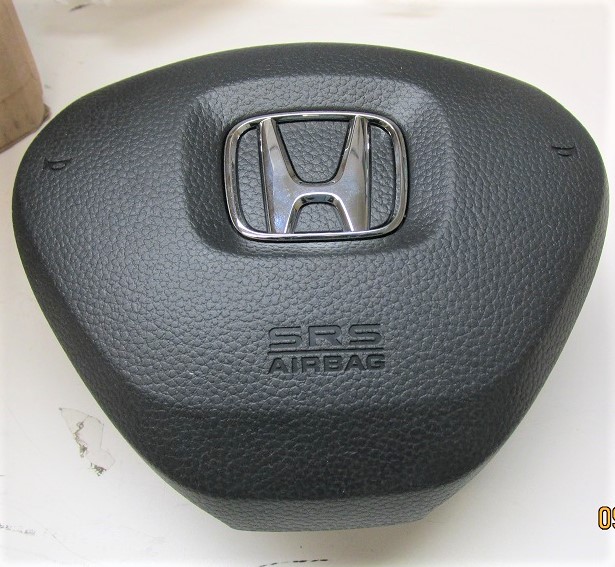
    Counterfeit Honda Airbags Mislabeled as “Plastic Boards”

    U.S. Customs and Border Protection (CBP) officers assigned to Ontario International Airport (ONT) express air cargo operations in Ontario, California in coordination with import specialists assigned to the Automotive & Aerospace Center of Excellence (AA Center) seized eight counterfeit Honda airbags arriving in two express packages from China.

    Fake Honda Airbag
    CBP officers discovered eight counterfeit
    Honda airbags arriving in two express packages
    from China.

    On September 12, CBP officers discovered the airbags while conducting an enforcement examination of the express packages. AA Center import specialists confirmed that the airbags were in violation of the Honda protected trademark. If genuine, the seized airbags would have an estimated manufacturer’s suggested retail price (MSRP) of $4,856.

    “Protecting the health and safety of the American consumer is a top priority for CBP,” said Carlos C. Martel, CBP Director of Field Operations in Los Angeles. “Counterfeit airbags pose American motorists in extreme danger, they can fail to deploy or even hurt passengers during a collision.”

    Airbag fraud occurs after a vehicle is involved in a wreck and the original airbags are replaced. Consumers buying airbags from non-legitimate sources online may encounter counterfeit versions sold at what appears to be a deep discount.

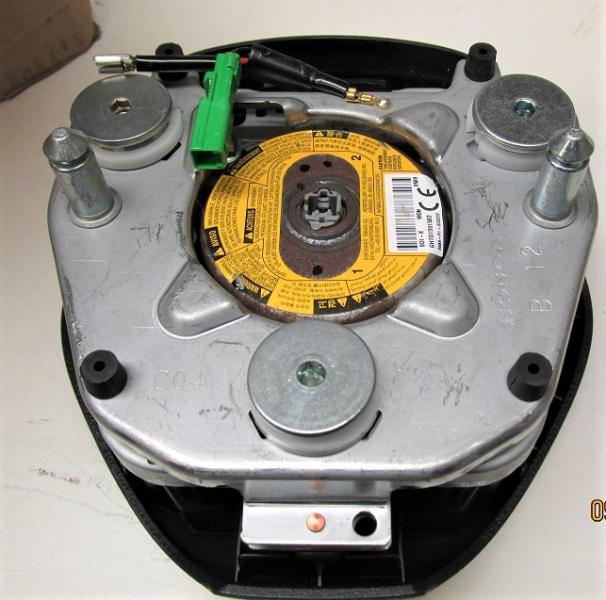
    Fake Honda Airbag 2
    Consumers buying airbags from non-legitimate
    sources online may encounter counterfeit
    versions sold at what appears to
    be a deep discount.

    “Airbags are essential car safety features and we know counterfeit devices are a major invisible threat already associated with fatalities in the United States,” NHTSA Acting Administrator James Owens said. “As a safety agency, NHTSA takes these cases extremely seriously and we applaud CBP’s efforts to intercept dangerous products before they get into circulation. NHTSA values its partnership with CBP and this work is literally saving lives.”

    “CBP commits substantial resources to detect, intercept and seize illicit goods arriving in the express package environment,” said Donald R. Kusser, CBP Port Director overseeing ONT international operations. “Counterfeiters are constantly attempting to take advantage of consumers by disguising their illicit goods as legitimate shipments.”

    CBP focuses on priority trade issues such as intellectual property rights and health and safety, in order to protect consumers from harmful products.

    CBP established an educational initiative to raise consumer awareness and consciousness about the consequences and dangers that are often associated with the purchase of counterfeit and pirated goods. Information about the Truth Behind Counterfeits public awareness campaign can be found at fakegoodsrealdangers.

    If you have any suspicion of or information regarding suspected fraud or illegal trade activity, please report the trade violation to e-Allegations Online Trade Violation Reporting System or by calling 1-800-BE-ALERT.

    Intellectual Property Rights (IPR) violations can also be reported to the National Intellectual Property Rights Coordination Center at iprcenter.gov/referral or by telephone at 1-866-IPR-2060.

    NHTSA’s mission is to save lives, prevent injuries, and reduce economic costs due to road traffic crashes through education, research, safety standards, and enforcement. The agency advises that the following consumers that may be at risk of owning a counterfeit air bag:

    • Consumers who have had air bags replaced at a repair shop that is not a new car dealer franchised to perform the repair
    • Consumers who have purchased a used car that may have sustained an air bag deployment before their purchase
    • Consumers who own a car with a salvage title
    • Consumers who have purchased replacement airbags from eBay or other non-certified sources—especially if they were purchased at unusually low prices (i.e. less than $400)

    Concerned consumers should contact their local certified automotive franchised dealer to have their vehicle inspected and visit nhtsa.gov/equipment/air-bags for more information.

    Commercial Customs Operations Advisory Committee to Meet December 4th

    The Commercial Customs Operations Advisory Committee (COAC) will hold its quarterly meeting on Wednesday, December 4, 2019, in Washington, DC.

    The COAC will hear from the current subcommittees on the topics listed below and then will review, deliberate, provide observations, and formulate recommendations on how to proceed:

    1. The Next Generation Facilitation Subcommittee will provide an update on the One U.S. Government Working Group's progress and an overview of the recent two-day meeting, during which the working group discussed the Global Business Identifier and working group priorities. There will be a subcommittee update on the progress of the Unified Entry Processes Working Group's development of an operational framework and the mapping of deficiencies in the current entry process. The subcommittee will discuss progress on the Emerging Technologies Working Group's various initiatives, including the recent completion of the Intellectual Property Rights Blockchain Proof of Concept testing and follow-up assessment. Finally, the subcommittee will provide an update on the efforts of the E-Commerce Working Group's projects and pilots.

    2. The Secure Trade Lanes Subcommittee will provide updates on the Trusted Trader Working Group's activites. They will also provide an analysis of the In-Bond processes with a view to areas that are being developed for greater efficiency. The newly launched Export Modernization Working Group will provide updates regarding categorizing issues with export handling and identification of export data elements and opportunities for export process efficiencies. The Export Modernization Working Group may also submit recommendations for COAC's consideration. The subcommittee will report on the planned scope of work to be addressed by the newly formed Remote and Autonomous Cargo Processing Working Group.

    3. The Rapid Response Subcommittee will provide an update regarding the newly formed Broker Continuing Education Taskforce and their goal to evaluate a continuing education framework for licensed customs brokers.

    4. The Intelligent Enforcement Subcommittee will discuss their progress and activities, and they may also submit recommendations from the working groups under their jurisdiction for COAC's consideration. There will be updates from the following: the recently launched Intellectual Property Rights Working Group, which encompasses the visions of the 21st Century Customs Framework; the Anti-Dumping and Countervailing Duties (AD/CVD) Working Group (reporting on its efforts to discuss the AD/CVD Redesign and Date of Duty Calculation); the Bond Working Group (reporting on risk-based bonding and bond sufficiency); and, the Forced Labor Working Group, which was previously on hiatus (reporting on new topics).

    Friday, November 8, 2019

    Army and Air Force Undershirt Contract Awarded

    Knox County Association for Remarkable Citizens, Vincennes, Indiana, has been awarded a maximum $9,351,147 modification (P00008) exercising the second one-year option of a one-year base contract (SPE1C1-18-D-N024) with two one-year option periods for the GEN III, Layer II, Mid-Weight Undershirt. This is a firm-fixed-price contract. Location of performance is Indiana, with a Nov. 12, 2020, performance completion date. Using services are Army and Air Force. Type of appropriation is fiscal 2020 through 2021 defense working capital funds. The contracting activity is the Defense Logistics Agency Troop Support, Philadelphia, Pennsylvania.

    Thursday, November 7, 2019

    Honor Our Veterans on Armistice Day

    Monday, November 11, 2019, is Veterans Day, a federal holiday in the United States. National, state, and local government offices will be closed in commemoration. Most businesses will be open.

    Do you pause for a moment of silence at the eleventh hour of the eleventh day of the eleventh month? I remember, decades ago, in grade school, we all did so in observance of Armistice Day, even though the name of the commemoration had been official changed to Veterans Day way back in 1954.

    Without question, we do right to honor our soldiers, seamen, airmen, marines, and coast guard with a public holiday. But let us not forget the origins of Veterans Day/Armistice Day, as remembrance of the end of the "War to End All Wars." Thomas Hardy wrote And There Was a Great Calm on the occasion of the signing of the armistice, here's one stanza --

    Breathless they paused. Out there men raised their glance
    To where had stood those poplars lank and lopped,
    As they had raised it through the four years’ dance
    Of Death in the now familiar flats of France;
    And murmured, 'Strange, this! How? All firing stopped?'

    In November 1919, President Wilson proclaimed November 11 as the first commemoration of Armistice Day. In 1926 Congress officially encouraged the observance of the day throughout the nation, but in was not until 1938 that Armistice Day became a legal federal holiday.

    In 1954, November 11th became a day to honor American veterans of all wars and President Dwight D. Eisenhower issued the first Veterans Day Proclamation. Subsequent Presidents have continued the practice of issuing such proclamations.

    By the way, Veterans Day is always on November 11th, which this year is a Monday. In 1968 the Uniform Holiday Bill removed several federal holidays from their traditional dates, placing them on Mondays in order to create three-day weekends. But many were not pleased with this tinkering with Veterans Day and in 1975 President Gerald R. Ford signed the law which returned the annual observance of Veterans Day to its original date of November 11, beginning in 1978. This action supported the desires of the overwhelming majority of state legislatures, all major veterans service organizations and the American people.

    For more information on the celebration of Veterans Day, see www.va.gov/opa/vetsday

    God Bless the United States of America!

    Wednesday, November 6, 2019

    CPSC's Pagie Witzen Attending the AATCC Fall Committee Meeting

    Paige Witzen, Consumer Product Safely Commission Directorate of Laboratory Sciences, will be attending the American Association of Textile Chemists and Colorist ("AATCC") fall committee meetings in Raleigh, NC, November 12-13, 2019.

    Rhode Island Textile Company to Announce Government Contract Awards Next Tuesday

    On November 12, 2019, The Brickle Group will announce Defense Logistics Agency ("DLA") contract awards with Governor Raimondo, Senator Reed, Senator Whitehouse and Congressman Cicilline.

    Thursday, October 31, 2019

    ITC Reports on Miscellaneous Tariff Suspensions in Effect

    On October 18, 2019, the U.S. International Trade Commission released Report 4987 American Manufacturing Competiveness Act: Effects of Temporary Duty Suspensions and Reductions on the U.S. Economy

    Main Findings:

    • As of March 2019, over 90 percent of firms responding to the Commission's questionnaire imported or planned to import goods under the Harmonized Tariff Schedule 9902 headings (provisions) that provide temporary duty suspensions and reductions; about one-third of these firms have increased or planned to increase imports. Between November 2018 and May 2019, importers saved $179 million in duties on imports of $5.4 billion.
    • As of March 2019, many responding firms stated they had not had enough time to take full advantage of the duty suspensions and reductions. Some respondents also reported that section 301 tariffs on products of China have lessened the positive impacts of the duty relief.
    • As a result of the duty relief, nearly a quarter of responding manufacturers reported a decrease in production costs. Among all respondents, many expected future increases in sales volumes, number of customers, and investment in new product development. Compared with larger firms, more responding small and medium-sized enterprises (SMEs) reported that the duty relief has had positive effects on virtually all business operations.
    • Chemicals firms account for the largest share of 9902 headings and imports. Thus, the largest number of responding firms reporting benefits from the duty relief are in the Chemicals group.
    • The results of the Commission’s economic modeling suggest that the temporary duty relief will lead to a small increase in output, welfare, and gross domestic product (GDP) in the United States. Moreover, the average price of goods imported under the 9902 provisions will likely decline, although not by the full amount of the duty reduction.

    Case Study: Textiles

    • During the period November 2018–May 2019, importers saved $5 million in duties on imports of $109 million entered under the 9902 headings for the Textiles subgroup, equivalent to an average duty reduction of 4.7 percentage points.
    • Nearly 90 percent of firms responding to the Commission's questionnaire reported that they import or plan to import textile products eligible for duty suspensions or reductions under the 9902 provisions, and over a quarter have increased or plan to increase these imports.
    • Responding firms in this subgroup reported increases in investment in new product development and employment. Nearly 35 percent of respondents anticipate increases in sales volume, and almost one-third expect increases in their customer base.
    • Two of 6 responding retailers and distributors/wholesalers lowered the prices of their imported products sold to customers because of the temporary duty relief, and 4 of 6 anticipate decreases in the future.
    • Nearly half of responding manufacturers reported that their production costs declined as a direct result of the 9902 provisions, and half anticipate this cost reduction will decrease in the future. Additionally, 27 percent anticipate increases in production volume as a direct result of the tariff relief.

    Complex Textile Supply Chains and the Question of the Country of Origin

    In Binding Ruling NY N303580, CBP determined El Salvador to be the country of origin of certain stuffed mattress covers. CBP has reviewed NY N303580 and has determined the ruling letter to be in error. It is now CBP's position that the country of origin of the stuffed mattress covers is either the United States, China, or El Salvador, depending on the style of mattress cover and respective fabric origin. CBP is proposing to modify the ruling and country of origin determination. Before taking this action CBP will consider public comments. Comments must be received on or before November 29, 2019.

    The articles in are processed in more than one country, which complicated the country of origin determination.

    Styles S-10 and 12

    • Stuffed Fabric/Top and Border Knit/Cover are formed in the United States.
    • Bottom Fabric is formed in the United States.
    • Cutting, sewing, and assembly operations in El Salvador.

    Style S-14

    • Stuffed Fabric/Top Knit/Cover is formed in the United States.
    • Border Fabric is formed in China.
    • Bottom Fabric is formed in the United States.
    • Cutting, sewing, and assembly operations in El Salvador.

    Styles T-10 and 12

    • Stuffed Fabric/Top Knit/Cover are formed in Mexico or China.
    • Fabric is formed in China.
    • Bottom Fabric is formed in China
    • Cutting, sewing, and assembly operations in El Salvador.

    CBP HOLDING:

    • The country of origin for the S-10 and S-12 mattress covers is the United States.
    • The country of origin for the S-14 mattress cover is El Salvador.
    • The country of origin for the T-10 and T-1” mattress covers in which the component fabric is manufactured in China, is China.
    • The country of origin for the T-1” and T-12 mattress covers in which the component fabrics are manufactured in China and Mexico, is El Salvador.

    CBP's reasoning in this case can be viewed at CUSTOMS BULLETIN AND DECISIONS, VOL. 53, NO. 39, OCTOBER 30, 2019

    Cartoon Character Gloves Are Dutiable as Wearing Apparel, Says Customs.

    In NY B871119, dated July 8, 1997, and NY N006668, dated February 14, 2007, CBP classified gloves and a mitt in heading 9505, HTSUS, specifically in subheading 9505.90.60, HTSUS (rate of duty ZERO), which provides for "Festive, carnival or other entertainment articles, including magic tricks and practical joke articles; parts and accessories thereof: Other: Other." CBP has reviewed the rulings and has determined the ruling letters to be in error. It is now CBP’s position that the gloves and a mitt are properly classified, in heading 6116, HTSUS, specifically in subheading 6116.93.88, HTSUS (rate of duty 18.6%), which provides for "Gloves, mittens and mitts, knitted or crocheted: Other: Of synthetic fibers: Other: Without fourchettes."

    The cartoon hands classified in NY N006668 are an oversized pair of “cartoon hand” style gloves, 12″ wide and 11″ in length, with one thumb and three fingers made from 100 percent polyester knit fabric and stuffed with foam. It also allows for the insertion of the thumb and separate insertion of the fingers.

    CBP's reasoning in this case can be viewed at CUSTOMS BULLETIN AND DECISIONS, VOL. 53, NO. 39, OCTOBER 30, 2019

    The question of whether imported merchandise is a "festive article" duty-free under a Heading 9505 provision or an article of wearing apparel or a textile article, subject to the import duties applicable to goods of chapters 61 through 63, has been the subject of litigation, Customs rulings and ruling reversals. Clients of Agathon Associates can read more at www.agathonassociates.com/textile-pri/festive-articles/.

    United States Wins WTO Challenge to Indian Export Subsidies for Textiles, Apparel, and Other Industries

    A World Trade Organization ("WTO") dispute panel has agreed with the United States that India provides prohibited export subsidies to Indian exporters worth over $7 billion annually. According to the panel, India gives prohibited subsidies to producers of steel products, pharmaceuticals, chemicals, information technology products, textiles, and apparel, to the detriment of American workers and manufacturers.

    The Indian programs found in violation of WTO rules are: the Merchandise Exports from India Scheme ("MEIS"); Export Oriented Units Scheme ("EOU) and related sector specific schemes; Special Economic Zones ("SEZ"); Export Promotion Capital Goods Scheme; and a duty free imports for exporters program. The panel gave India six months to withdraw these prohibited subsidies.

    According to the Indian Government, thousands of Indian companies are receiving subsidies totaling over $7 billion annually from these programs, and India has increased the size and scope of these programs. For example, India has rapidly expanded the MEIS to include more than 8,000 eligible products, nearly double the number of products covered since its introduction in 2015. Exports under the SEZ have increased over 6,000 percent from 2000 to 2017 and in 2016 accounted for over $82 billion in exports, or 30 percent of India’s export volume. Exports from the EOU increased by over 160 percent from 2000 to 2016.

    Export subsidies provide an unfair competitive advantage to recipients, and WTO rules expressly prohibit them. A limited exception to this rule is for specified developing countries that may continue to provide export subsidies temporarily until they reach a defined economic benchmark. India was initially within this group, but it surpassed the benchmark in 2015. India’s exemption has expired, but India has not withdrawn its export subsidies.

    The October 31, 2019, panel report rejects India’s assertion that it is entitled to additional time to provide export subsidies even after hitting the defined economic benchmark. The panel report concludes that each program is an export subsidy inconsistent with India's WTO obligations.

    The withdrawal of these prohibited subsidies will result in American workers and manufacturers competing on a fairer basis with their Indian competitors.

    USTR May Extend China 301 List 1 Exclusions through 2020.

    Effective July 6, 2018, the U.S. Trade Representative imposed additional duties on goods of China with an annual trade value of approximately $34 billion as part of the action in the Section 301 investigation of China’s acts, policies, and practices related to technology transfer, intellectual property, and innovation. The U.S. Trade Representative initiated the exclusion process in July 2018 and granted an initial set of exclusions in December 2018. The exclusions granted in December 2018 are set to expire on December 28, 2019. The U.S. Trade Representative has decided to consider extending particular exclusions granted in December 2018 for up to twelve months. The Office of the U.S. Trade Representative (USTR) invites public comment on whether to extend particular exclusions. Comments will be accepted beginning November 1, 2019, and through November 30, 2019.

    See 84 FR 58427

    President Trump Modifies AGOA Apparel Eligibility for Mali, and GSP Eligibility for Ukraine and Thailand

    On October 31, 2019, the Executive Office of the President published in the Federal Register (84 FR 58567) Proclamation 9955 of October 25, 2019 To Modify Duty-Free Treatment Under the Generalized System of Preferences and for Other Purposes.

    UKRAINE. The proclamation restores the duty-free treatment accorded under GSP to certain products from Ukraine because the country has made progress towards providing adequate and effective protection of intellectual property rights. The list of products restored to GSP eligibility for Ukraine is available at http://ustr.gov/sites/default/files/files/gsp/Products_to_be_restored_to_GSP_eligibility_for_Ukraine.pdf

    THE REPUBLIC OF MALI. The proclamation designates Mali a lesser developed beneficiary sub-Saharan African country (LDBC), thus qualifying it for LDBC preferential benefits. This action will take effect thirty days from the signing of the proclamation, November 24, 2019. Mali's AGOA benefits had been restored by Presidential Proclamation 9072 (December 23, 2013) which designated the Republic of Mali as a beneficiary sub-Saharan African country to the AGOA program; however, this Presidential Proclamation did not designate the Republic of Mali as a "lesser developed beneficiary sub-Saharan African country." As a consequence, Mali was unable to take advantage of special rules for certain apparel articles imported from "lesser developed beneficiary sub-Saharan African countries," in particular the third country fabric provision that enables Mali to produce apparel competitively.

    THAILAND. The proclamation withdraws the duty-free treatment accorded under GSP to certain products from Thailand because the country is not taking steps to afford workers in Thailand internationally recognized worker rights. This action will take effect six months from the issuance of this proclamation. Additional guidance will be issued close to the date of implementation. The list of products excluded from GSP eligibility for Thailand is available at: http://ustr.gov\sites\default\files\files\gsp\Products_to_be_removed_from_GSP_eligibility_for_Thailand.pdf

    If questions contact the Trade Agreements Branch at FTA@CBP.DHS.gov.

    Army Coverall Contract Awarded to Puerto Rico Company

    Propper International, Cabo Rojo, Puerto Rico, has been awarded a maximum $13,099,478 firm-fixed-price, indefinite-quantity contract for Improved Combat Vehicle Crewmen's coveralls with the operational camouflage pattern. This is a one-year base contract with four one-year option periods. This was a competitive acquisition with two responses received. Location of performance is Puerto Rico, with an Oct. 29, 2020, performance completion date. Using military service is Army. Type of appropriation is fiscal 2020 through 2021 defense working capital funds. The contracting activity is the Defense Logistics Agency Troop Support, Philadelphia, Pennsylvania (SPE1C1-20-D-1205).

    Wednesday, October 30, 2019

    From Your Head to Your Toes: Made in the USA Matters

    Read about two U.S.-based companies, Wigwam and Bollman, which have been manufacturing socks and hats in the United States for 265 years, collectively. READ MORE.

    Monday, October 28, 2019

    Draper Knitting is honored to have been both nominated and selected to be part of Boston’s WCVB Channel 5’s “Made in Mass” segment.

    USTR Publishes Textile and Other Exclusions from China 301 List 3

    On October 28, 2019, the Office of the United States Trade Representatives published in the Federal Register (84 FR 57803) Notice of Product Exclusions: China’s Acts, Policies, and Practices Related to Technology Transfer, Intellectual Property, and Innovation.

    SUMMARY: In September 2018, the U.S. Trade Representative imposed additional duties on goods of China with an annual trade value of approximately $200 billion as part of the action in the Section 301 investigation of China's acts, policies, and practices related to transfer, intellectual property, and innovation. The U.S. Trade Representative initiated a product exclusion process in June 2019, and interested persons have submitted requests for the exclusion of specific products. This notice announces the U.S. Trade Representative's determination to grant certain exclusion requests, as specified in the annex to this notice.

    DATES: The product exclusions announced in this notice will apply as of the September 24, 2018, effective date of the $200 billion action, to August 7, 2020.

    Items 13 through 19 on the list are textile articles.

    (13)Yarn of carded Merino sheep wool, not put up for retail sale, containing 85 percent by weight of wool, of which the average fiber diameter is not more than 25 microns5106.10.0090
    (14)Woven dyed fabrics of 100 percent textured polyester filament yarn, measuring 332.7 cm in width, weighing more than 170 g/m25407.52.2060
    (15)Nonwoven fabrics of man-made fibers, weighing more than 25 g/m2 but not more than 70 g/m2, with a smooth or embossed texture (not impregnated, coated or covered with material other than or in addition to rubber, plastics, wood pulp or glass fibers), in rolls that are pre-slitted in lengths of not less than 15 cm to not more than 107 cm, for use in the manufacture of personal care wipes5603.12.0090
    (16)Seat belt webbing of man-made fibers, measuring 25 mm or more but not exceeding 50 mm in width, not cut to specific length5806.32.2000
    (17)Imitation leather fabrics, of man-made fibers impregnated, coated, covered or laminated with 75 percent polyvinyl chloride (PVC) by weight5903.10.2090
    (18)Fabrics of man-made micro-denier fibers impregnated, coated, covered, or laminated with polyurethane, of a width of at least 135 cm but no more than 150 cm, weighing at least 206 g/m2 but not more than 500 g/m25903.20.2500
    (19)Long pile knit fabrics, of acrylic pile on polyester ground, valued not over $16 per m26001.10.2000

    Saturday, October 26, 2019

    $7.2 Million Army and Air Force Jacket Contract Awarded

    Tennier Industries, Delray, Florida, has been awarded a maximum $7,152,750 firm-fixed-price, indefinite-delivery/indefinite-quantity contract for the GEN III Layer 5 Soft Shell Jacket. This was a competitive acquisition with one response received. This is a one-year base contract with two one-year option periods. Location of performance is Florida, with an Oct. 24, 2020, performance completion date. Using military services are Army and Air Force. Type of appropriation is fiscal 2020 through 2021 defense working capital funds. The contracting activity is the Defense Logistics Agency Troop Support, Philadelphia, Pennsylvania (SPE1C1-19-D-1203).

    Friday, October 25, 2019

    USTR Announces Exclusion Procedures for China Section 301 Tranche 4

    On October 24, 2019, the Office of the United States Trade Representative published in the Federal Register (84 FR 57144) [Docket Number USTR–2019–0005] Procedures for Requests To Exclude Particular Products From the August 2019 Action Pursuant to Section 301: China’s Acts, Policies, and Practices Related to Technology Transfer, Intellectual Property, and Innovation.

    The portal for filing will open October 31, 2019, and close January 31, 2020.

    U.S. International Trade Commission Releases The Year in Trade 2018

    The U.S. International Trade Commission (USITC) has released The Year in Trade 2018, its annual overview of developments regarding the administration of U.S. trade laws and trade agreements.

    The USITC's The Year in Trade is one of the government's most comprehensive reports available regarding activities related to U.S. trade policies, agreements, and trade laws. This report is the 70th in a series of annual reports submitted to the U.S. Congress under section 163(c) of the Trade Act of 1974 (19 U.S.C. 2213(c)) and its predecessor legislation.

    The publication reviews U.S. international trade laws and actions under these laws, activities of the World Trade Organization (WTO), and developments regarding U.S. free trade agreements (FTAs), FTA negotiations, and U.S. bilateral trade relations with major trading partners in 2018.

    The Year in Trade 2018 covers:

    • all U.S. antidumping, countervailing duty, safeguard, intellectual property rights infringement, national security and section 301 cases active in 2018.  In addition, the 2018 report covers the operation of U.S. trade preference programs, including the U.S. Generalized System of Preferences, the African Growth and Opportunity Act, the Nepal Trade Preferences Act, and the Caribbean Basin Economic Recovery Act, including initiatives for Haiti;

    • WTO dispute settlement decisions and other significant activities in the WTO, the Organisation for Economic Co-operation and Development, and the Asia-Pacific Economic Cooperation forum;

    • negotiations on U.S. FTAs with the European Union, the United Kingdom, Japan, and on the United States-Canada-Mexico Agreement, negotiations on modifications to the U.S.-Korea FTA, and developments regarding the North American Free Trade Agreement and other U.S. FTAs already in effect; and

    • bilateral trade issues with selected major U.S. trading partners -- the European Union, China, Canada, Mexico, Japan, South Korea, India, and Taiwan.

    The report also provides an overview of U.S. trade in goods and services during 2018. Statistical tables highlight U.S. bilateral trade with major trading partners and trade under U.S. trade preference programs and free trade agreements.

    An interactive, web-based version of The Year in Trade 2018 will be released later this month on October 17, 2019.

    The Year in Trade 2018 (USITC Publication 4986, October 2019) will be posted on the USITC's Internet site at https://www.usitc.gov/publications/332/pub4986.pdf.   Other reports in this series dating back to 1948 can also be found on the Commission's website at https://www.usitc.gov/annual_reports_archive.  

    $8 Million Air Force Trouser Contract Awarded

    Creighton AB Inc., Reidsville, North Carolina, has been awarded a maximum $8,055,077 firm-fixed-price contract for men's trousers. This was a competitive acquisition with one response received. This is a one-year base contract with four one-year option periods. Locations of performance are North Carolina and New York, with an Oct. 23, 2020, performance completion date. Using military service is Air Force. Type of appropriation is fiscal 2020 through 2021 defense working capital funds. The contracting activity is the Defense Logistics Agency Troop Support, Philadelphia, Pennsylvania (SPE1C1-20-D-1211). (Awarded Oct. 23, 2019)

    Wednesday, October 23, 2019

    National Industries for the Blind Awarded Contract for Combat Helmet Pad Suspension System

    National Industries for the Blind, Alexandria, Virginia, has been awarded a $13,404,000 modification (P00012) exercising the third one-year option period of a one-year base contract (SPE1C1-17-D-B003) with four one-year option periods for the advanced combat helmet pad suspension system. This is a firm-fixed-price, indefinite-delivery/indefinite-quantity contract. Locations of performance are Virginia, Pennsylvania and North Carolina, with an Oct. 26, 2020, performance completion date. Using military service is Army. Type of appropriation is fiscal 2020 through 2021 defense working capital funds. The contracting activity is the Defense Logistics Agency Troop Support, Philadelphia, Pennsylvania.

    Five Manufacturing Innovations that Will Change the World

    From clothing that can adapt to temperature to bandages that can speed up the healing process, here are five innovations developed by Manufacturing USA-affiliated institutes that will soon change the lives of people across the country.

    Read more: https://www.smithsonianmag.com/sponsored/5-manufacturing-innovations-will-change-world-180973108/.

    Thursday, October 17, 2019

    National Industries for the Blind Awarded Army T-Shirt Contract

    National Industries for the Blind, Alexandria, Virginia, has been awarded a maximum $8,562,960 modification (P00005) exercising the first one-year option period of a one-year base contract (SPE1C1-19-D-B043) with four one-year option periods for moisture wicking T-shirts. This is an indefinite-delivery contract. Locations of performance are Virginia, North Carolina and Arkansas, with an Oct. 30, 2020, performance completion date. Using military service is Army. Type of appropriation is fiscal 2020 through 2021 defense working capital funds. The contracting activity is the Defense Logistics Agency Troop Support, Philadelphia, Pennsylvania.

    U.S. to Begin Imposing 25% Tariff on Certain Wool and Cashmere Apparel from the United Kingdom

    In a Federal Register Notice scheduled for publication on October 18, 2019, the Office of the United States Trade Representative announces the final list of articles from the United Kingdom and certain other States of the European Union to be subject to additional Section 301 tariffs relating to the Large Civil Aircraft Dispute.

    On October 2, 2019, The United States won the largest arbitration award in World Trade Organization history in its dispute with the European Union over illegal subsidies to Airbus. This follows four previous panel and appellate reports from 2011-2018 finding that EU subsidies to Airbus break WTO rules. This decision demonstrates that massive EU corporate welfare has cost American aerospace companies hundreds of billions of dollars in lost revenue over the nearly 15 years of litigation.

    The tariffs will be applied to a range of imports from EU Member States, with the bulk of the tariffs being applied to imports from France, Germany, Spain, and the United Kingdom – the four countries responsible for the illegal subsidies. Although USTR has the authority to apply a 100 percent tariff on affected products, at this time the tariff increases will be limited to 10 percent on large civil aircraft and 25 percent on agricultural and other products. The U.S. has the authority to increase the tariffs at any time, or change the products affected. The articles covered by the additional tariffs vary from country to country. The only country subject to additional tariffs on textile articles is the United Kingdom.

    Products of the United Kingdom described below are subject to additional import duties of 25 percent ad valorem.

    6110.12.10Sweaters, pullovers, sweatshirts, waistcoats (vests) and similar articles, knitted or crocheted, of Kashmir goats, wholly of cashmere
    6110.20.20Sweaters, pullovers and similar articles, knitted or crocheted, of cotton, nesoi
    6110.30.30Sweaters, pullovers and similar articles, knitted or crocheted, of manmade fibers, nesoi
    6202.99.15Rec perf outwear, women's/girls' anoraks, wind-breakers & similar articles, not k/c, tex mats (not wool, cotton or mmf), cont < 70% by wt of silk
    6202.99.80Women's orgirls' anoraks, wind-breakers & similar articles, not k/c, of tex mats (not wool, cotton or mmf), cont < 70% by wt of silk
    6203.11.60Men's or boys' suits of wool, not knitted or crocheted, nesoi, of wool yarn with average fiber diameter of 18.5 micron or less
    6203.11.90Men's or boys' suits of wool or fine animal hair, not knitted or crocheted, nesoi
    6203.19.30Men's or boys' suits, of artificial fibers, nesoi, not knitted or crocheted
    6203.19.90Men's or boys' suits, of textile mats(except wool, cotton or mmf), containing under 70% by weight of silk or silk waste, not knit or croch
    6208.21.00Women's or girls' nightdresses and pajamas, not knitted or crocheted, of cotton
    6211.12.40Women's or girls' swimwear, of textile materials(except mmf), containing 70% or more by weight of silk or silk waste, not knit or crocheted
    6211.12.80Women's or girls' swimwear, of textile materials(except mmf), containing under 70% by weight of silk or silk waste, not knit or crocheted
    6301.30.00Blankets (other than electric blankets) and traveling rugs, of cotton
    6301.90.00Blankets and traveling rugs, nesoi
    6302.21.50Bed linen, not knit or crocheted, printed, of cotton, cont any embroidery, lace, braid, edging, trimming, piping or applique work, not napped
    6302.21.90Bed linen, not knit or croc, printed, of cotton, not cont any embroidery, lace, braid, edging, trimming, piping or applique work, not napped

    The effective date of the additional duties is October 18, 2019.

    The award of $7.5 billion annually is by far the largest award in WTO history—nearly twice the largest previous award. The Arbitrator calculated this amount based on WTO findings that EU launch aid for Airbus is causing significant lost sales of Boeing large civil aircraft, as well as impeding exports of Boeing large aircraft to the EU, Australia, China, Korea, Singapore, and UAE markets. Under WTO rules, the Arbitrator’s decision is final and not subject to appeal.

    Friday, October 11, 2019

    Air Force Boot Contract Awarded

    Belleville Shoe Co., Belleville, Illinois, has been awarded a maximum $12,524,036 firm-fixed-price, indefinite-delivery/indefinite-quantity contract for Air Force temperate weather, Coyote boots. This was a competitive acquisition with two responses received. This is a one-year base contract with three one-year option periods. Location of performance is Illinois, with an Oct. 10, 2020, performance completion date. Using customer is Air Force. Type of appropriation is fiscal 2019 through 2020 defense working capital funds. The contracting agency is the Defense Logistics Agency Troop Support, Philadelphia, Pennsylvania (SPE1C1-20-D-1208).

    Carbon Fiber FTZ Approved for Export Only

    On June 24, 2019, the Foreign-Trade Zone Board published in the Federal Register (84 FR 29496) Notification of Proposed Production Activity; Teijin Carbon Fibers, Inc. (Polyacrylonitrile-Based Carbon Fiber); Greenwood, South Carolina

    Production under FTZ procedures will exempt TCF from customs duty payments on the foreign-status components used in export production. On its domestic sales, for the foreign-status materials/components noted below, TCF wanted to able to choose the duty rate during customs entry procedures that applies to carbon fiber (duty free).

    On October 11, 2019, the Foreign-Trade Zone Board published in the Federal Register (84 FR 54837) Foreign-Trade Zone (FTZ) 38— Spartanburg County, South Carolina; Authorization of Limited Production Activity; Teijin Carbon Fibers, Inc. (Polyacrylonitrile-Based Carbon Fiber); Greenwood, South Carolina.

    The Board authorized the production activity described in the notification on a limited basis, subject to a restriction requiring that all foreign status polyacrylonitrile (PAN) fiber admitted for production activity must bere-exported (entry for U.S. consumption was not authorized).

    This is consistent with earlier FTZ filings relating to carbon fiber approved for export only.

    Wednesday, October 9, 2019

    Monday is Columbus Day in the U.S.

    Monday, October 14th, is Columbus Day, a federal holiday in the United States. National, State, and local government offices will be closed. Observance of the holiday by the private sector varies from region to region.

    Columbus and the Last Hope of Mankind

    "We do not read even of the discovery of this continent, without feeling something of a personal interest in the event; without being reminded how much it has affected our own fortunes and our own existence. It would be still more unnatural for us, therefore, than for others, to contemplate with unaffected minds that interesting, I may say that most touching and pathetic scene, when the great discoverer of America stood on the deck of his shattered bark, the shades of night falling on the sea, yet no man sleeping; tossed on the billows of an unknown ocean, yet the stronger billows of alternate hope and despair tossing his own troubled thoughts; extending forward his harassed frame, straining westward his anxious and eager eyes, till Heaven at last granted him a moment of rapture and ecstasy, in blessing his vision with the sight of the unknown world." -- Daniel Webster, First Bunker Hill Monument Oration, 1825

    In Boston we are surrounded by familiar sights -- Old North Church, the Old State House, Old South Meeting House, and the other stops on the Freedom Trail -- that remind us of Boston's unique Revolutionary War history. At 243 years distance from 1775, we are nearly two-and-a–half centuries removed from the beginning of the American War of Independence. In like manner, 1775 was a bit more than two-and-a-half centuries (283 years to be precise) removed from Columbus' discovery of the New World. Independence and the Revolutionary War mark not the beginning, but the halfway point in the history of European civilization in America.

    In his remarks, quoted above, Mr. Webster, on the 50th anniversary of the Battle of Bunker Hill, traced the origins of the United States not to the Pilgrims and Plymouth Rock (although he mentions them in the oration), nor to the earlier English settlement of Virginia (not even mentioned by Webster), but to Christopher Columbus and his first "sight of the unknown world."

    Others came here earlier -- possibly the Vikings, maybe other Europeans, and certainly the American Indians who arrived most probably from Asia by land-bridge to Alaska. But Webster -- and many of us concur -- begins our history with Columbus. All month we celebrate Italian-American Heritage and we celebrate the brave and persevering Italian navigator who opened the way for immigrants from every nation to settle in this New World and create the United States that remains, to quote again from Webster's speech, "the last hope of mankind." This is a phrase that will be echoed by Abraham Lincoln in his December 1862 Annual Message to Congress ("the last best, hope of earth") and Ronald Reagan in his January 1974 "We Will Be a City on a Hill" speech ("the last best hope of man on earth"). God willing America shall continue for many years as a beacon of liberty.

    USITC report U.S. SME Exports: Trade-related Barriers Affecting Exports of U.S. Small and Medium-sized Enterprises to the United Kingdom

    On October 4, 2019, the U.S. International Trade Commission released Inv. No. 332-569, Publication 4953, U.S. SME Exports: Trade-related Barriers Affecting Exports of U.S. Small and Medium-sized Enterprises to the United Kingdom

    The report focuses on barriers identified by SMEs that hinder their ability to export to the UK. The USITC collected primary qualitative information and data to analyze both tariff and nontariff measures that may affect U.S. SME exports to the UK.  The report includes suggestions from SMEs and relevant literature for actions that would help address some of the identified barriers and enhance the participation of U.S. SMEs in U.S.-UK trade.

    Main Findings:

    • SMEs believe they are particularly affected by a number of specific crosscutting trade-related barriers imposed by a European Union (EU) or UK government law or policy; these include tariffs and taxes, customs procedures, intellectual property measures, and temporary entry provisions.  Further, SMEs noted various market-related barriers that they perceive as affecting their ability to export to the UK market, including logistical and finance-related issues, and difficulties in entering or participating in the UK market.

    • Standards, technical regulations, and conformity assessment procedures are most often cited by SMEs as limiting their exports to the UK.  The most frequently cited SME concern is that the UK often does not recognize the standards set by U.S. standards bodies, which forces many U.S. firms to seek dual U.S. and UK certifications before they can export their products.

    • SMEs producing manufactured goods reportedly face numerous regulatory measures related to standards and regulations, which include labeling, licensing, and certification.  U.S. agrifood SMEs also identified a variety of nontariff barriers that they face in the UK with respect to labeling requirements, sanitary and phytosanitary (SPS) requirements, geographical indications and wine names, packaging rules, food safety requirements, and certifications.

    • There are limited trade-related barriers for U.S. service exports to the UK.  However, the largest hardships U.S. SMEs engaged in the professional services industry say they face are temporary entry provisions, and licensing and credential issues. SMEs that export computer services reportedly encounter issues related to data protection and privacy laws, cybersecurity, and customs requirements.

    Tuesday, October 8, 2019

    Air Force on schedule with new uniform issue timeline

    Trainees entering into Basic Military Training, or BMT, at the 37th Training Wing this week are the first group to be issued the new Operational Camouflage Pattern, or OCP, uniforms.

    After taking Airmen feedback into consideration, the uniform board members said they chose the OCP for the improved fit and comfort and so that they will blend in with their soldier counterparts’ uniforms in the joint environments, according to Cooper.

    When Air Force officials announced last year they are adopting the Army OCP as the official utility uniform, they developed a three-year roll-out timeline across the force for the entire change over. This week puts them on target for issuing to the newest members.

    “Each trainee is issued four sets of uniforms with their initial issue,” said Bernadette Cline, clothing issue supervisor. “Trainees who are here in ABUs (Airmen Battle Uniforms) will continue to wear them throughout their time here, and will be replaced when they get their clothing allowance.”

    The 502nd Logistics Readiness Squadron Initial Issue Clothing outfits nearly 33,000 BMT trainees every year and maintains more than 330,000 clothing line items.

    “We partner with Defense Logistics Agency, who provides the clothing items upfront to be issued,” said Donald Cooper, Air Force initial clothing issue chief. “Then we warehouse and issue to the individuals’ size-specific clothing.”

    The OCP was chosen because its form will allow airmen to do their jobs easier, it fits in alongside soldiers in the field and functions well in the joint environment.

    “Right now, if someone deploys, they’ll get it issued,” Cline said, “Now that everyone is converting over to this uniform, they [the trainees] already have the uniform to work and deploy in.”

    Following the timeline, the OCP should now be available online for purchase as well.

    The next mandatory change listed on the timeline, to take place by June 1, 2020, will be the Airmen’s boots, socks, T-shirts, U.S. Flag and officer ranks to the spice brown or tan color.

    Switching from two different types of utility uniforms to just one, multifunction uniform could also simplify life for the airmen.

    “I think the biggest value is going to be the thought that they aren’t required to have two uniforms anymore once they convert to a uniform that is for deployment and day-to-day work,’” Cooper said.

    For more information on uniform guidance, visit https://www.afpc.af.mil/Career-Management/Dress-and-Appearance/.

    IKEA Recalls Infant Bibs Due to Choking Hazard

    Description: This recall involves the MATVRÅ bibs for infants sold in a two pack with one blue and one red bib with a snap at the back of the neck. The blue bib has a green seam along the outside with white polka dots. The red bib has a yellow seam along the outside with red polka dots. MATVRA, IKEA and the IKEA logo are printed on a white tag on the back of the bib.

    Remedy: Consumers should immediately stop using the recalled bibs and return them to any IKEA store for a full refund.

    Incidents/Injuries: The firm received two reports of the snaps on the bibs detaching. Neither incident occurred in the United States. No injuries have been reported.

    Sold At: Exclusively at IKEA stores nationwide and online at www.ikea-usa.com from August 2019 through September 2019 for about $2.

    Importer(s): IKEA Supply AG, of Switzerland

    Distributor(s): IKEA Supply AG, of Switzerland

    Manufactured In: Vietnam

    Recall number: 20-008

    MORE INFO AND PHOTOS.

    Saturday, October 5, 2019

    Army recruits receive American-made athletic footwear at basic training for first time

    A new fiscal new marked the initial issue of American-made athletic footwear to new Army recruits at Ft. Benning, Georgia Oct. 1, thanks to Defense Logistics Agency Troop Support.

    Approximately 134 recruits received the shoes, along with other uniform items part of the organizational clothing and individual equipment kit. Recruits at Ft. Leonard Wood, Missouri also received athletic footwear this week, with recruits at Ft. Jackson, South Carolina and Ft. Sill, Oklahoma to receive the new shoes starting Oct. 7.

    During the issuance process recruits are fitted for size, and provided items are scanned with radio-frequency identification technology. This system allows DLA Troop Support’s Clothing and Textiles supply chain to receive accurate inventory information directly from the recruit center’s issue line, customer relationship management supervisor Monique Williams explained.

    C&T will outfit nearly 19,000 new soldiers at all four RTCs with athletic footwear by the end of the year.

    DLA has been working with its industry and service partners for years gearing up for the roll-out, and overall athletic footwear program. Air Force recruits at Joint Base San Antonio-Lackland, Texas were the first to receive athletic footwear in January.

    Thursday, October 3, 2019

    U.S. to Impose 25% Tariff on Cashmere Sweaters and Wool Suits from the United Kingdom

    On October 2, 2019, The United States won the largest arbitration award in World Trade Organization history in its dispute with the European Union over illegal subsidies to Airbus. This follows four previous panel and appellate reports from 2011-2018 finding that EU subsidies to Airbus break WTO rules. This decision demonstrates that massive EU corporate welfare has cost American aerospace companies hundreds of billions of dollars in lost revenue over the nearly 15 years of litigation.

    The tariffs will be applied to a range of imports from EU Member States, with the bulk of the tariffs being applied to imports from France, Germany, Spain, and the United Kingdom – the four countries responsible for the illegal subsidies. Although USTR has the authority to apply a 100 percent tariff on affected products, at this time the tariff increases will be limited to 10 percent on large civil aircraft and 25 percent on agricultural and other products. The U.S. has the authority to increase the tariffs at any time, or change the products affected. The articles covered by the additional tariffs vary from country to country. The only country subject to additional tariffs on textile articles is the United Kingdom.

    Products of the United Kingdom described below are subject to additional import duties of 25 percent ad valorem.

    6110.12.10Sweaters, pullovers, sweatshirts, waistcoats (vests) and similar articles, knitted or crocheted, of Kashmir goats, wholly of cashmere
    6110.20.20Sweaters, pullovers and similar articles, knitted or crocheted, of cotton, nesoi
    6110.30.30Sweaters, pullovers and similar articles, knitted or crocheted, of manmade fibers, nesoi
    6202.99.15Rec perf outwear, women's/girls' anoraks, wind-breakers & similar articles, not k/c, tex mats (not wool, cotton or mmf), cont < 70% by wt of silk
    6202.99.80Women's orgirls' anoraks, wind-breakers & similar articles, not k/c, of tex mats (not wool, cotton or mmf), cont < 70% by wt of silk
    6203.11.60Men's or boys' suits of wool, not knitted or crocheted, nesoi, of wool yarn with average fiber diameter of 18.5 micron or less
    6203.11.90Men's or boys' suits of wool or fine animal hair, not knitted or crocheted, nesoi
    6203.19.30Men's or boys' suits, of artificial fibers, nesoi, not knitted or crocheted
    6203.19.90Men's or boys' suits, of textile mats(except wool, cotton or mmf), containing under 70% by weight of silk or silk waste, not knit or croch
    6208.21.00Women's or girls' nightdresses and pajamas, not knitted or crocheted, of cotton
    6211.12.40Women's or girls' swimwear, of textile materials(except mmf), containing 70% or more by weight of silk or silk waste, not knit or crocheted
    6211.12.80Women's or girls' swimwear, of textile materials(except mmf), containing under 70% by weight of silk or silk waste, not knit or crocheted
    6301.30.00Blankets (other than electric blankets) and traveling rugs, of cotton
    6301.90.00Blankets and traveling rugs, nesoi
    6302.21.50Bed linen, not knit or crocheted, printed, of cotton, cont any embroidery, lace, braid, edging, trimming, piping or applique work, not napped
    6302.21.90Bed linen, not knit or croc, printed, of cotton, not cont any embroidery, lace, braid, edging, trimming, piping or applique work, not napped

    The effective date of the additional duties is October 18, 2019.

    For the complete list of articles the U.S. will be imposing additional duties on CLICK HERE.

    The award of $7.5 billion annually is by far the largest award in WTO history—nearly twice the largest previous award. The Arbitrator calculated this amount based on WTO findings that EU launch aid for Airbus is causing significant lost sales of Boeing large civil aircraft, as well as impeding exports of Boeing large aircraft to the EU, Australia, China, Korea, Singapore, and UAE markets. Under WTO rules, the Arbitrator’s decision is final and not subject to appeal.

    Wednesday, October 2, 2019

    Proposed Revocation of One Ruling Letter and Revocation of Treatment Relating to The Country of Origin of Certain Laminated Fabrics

    In March 15, 2012, Binding Ruling Letter HQ H192977, CBP determined that the country of origin of the fabric styles, identified as Styles Savoy and Taffeta, is China, and the country of origin of the fabric styles, identified as Styles Luna and Dahlia, is India. CBP has reviewed HQ H192977 and has determined that ruling letter to be in error. It is now CBP's position that the country of origin of the above-referenced styles, identified as Styles Savoy, Taffeta, Luna and Dahlia, is England. Before taking this action, consideration will be given to any written comments received by November 1, 2019.

    Style Savoy is a bonded fabric consisting of a face fabric woven in China and printed with a striped pattern, laminated to a backing woven in Pakistan and an ethylene vinyl acetate adhesive multi-layer film made in Italy.

    Style Taffeta is a bonded fabric consisting of a face fabric woven in China and printed with flock in a floral pattern that has been laminated to woven backing from Pakistan and an ethylene vinyl acetate adhesive multi-layer film made in Italy.

    Style Luna is a bonded fabric consisting of jacquard face fabric woven in India and laminated to a plain-woven backing made in Pakistan laminated to a backing woven and an ethylene vinyl acetate adhesive multi-layer film made in Italy.

    Style Dahlia is a bonded fabric consisting of a jacquard face fabric woven in India and laminated to a plain-woven backing from Pakistan and an ethylene vinyl acetate adhesive multi-layer film made in Italy.

    Based on the information submitted, the greige fabrics are sent to England, where they are printed, laminated together with the adhesive film, treated with a non-visible coating, trimmed and cut to width into long rectangular pieces of fabric with right angled corners. The fabrics are then wound onto rolls for export into the United States for the manufacture of window blinds.

    In determining country of origin is England, Customs stated: "The fabrics ... are composed of three separately manufactured components (the face fabrics, the back fabrics and the adhesive film), assembled together. The term “wholly assembled,” ... means all components, of which there must be at least two, preexisted in essentially the same condition as found in the finished good and were combined to form the finished good in a single country, territory, or insular possession. ... the assembly operation performed abroad may consist of any method used to join or fit together solid components, such as welding, soldering, riveting, force fitting, gluing, lamination, sewing, or the use of fasteners). In the instant case, the face and back fabrics, as well as the adhesive film, preexisted in essentially the same condition prior to being laminated together in England. Therefore, we find that the fabrics at issue meet the above-discussed definition of wholly assembled. Since the fabrics were wholly assembled in England, we find that England is the country of origin for fabric styles Savoy, Taffeta, Luna and Dahlia."

    Tuesday, October 1, 2019

    CBP Issues Detention Orders against Apparel Company Suspected of Using Forced Labor

    On September 30, U.S. Customs and Border Protection ("CBP") issued five Withhold Release Orders covering five different products, imported from five different countries. This action was based on information obtained and reviewed by CBP that indicates that the products are produced, in whole or in part, using forced labor.

    Included in the list was garments produced by Hetian Taida Apparel Co., Ltd. in Xinjiang, China; produced with prison or forced labor.

    Under U.S. law, it is illegal to import goods into the U.S that are made wholly or in part by forced labor, which includes convict labor, indentured labor, and forced or indentured child labor. When sufficient information is available, CBP may detain goods believed to have been produced with forced labor. Importers have the opportunity to either re-export the detained shipments at any time or to submit information to CBP demonstrating that the goods are not in violation.

    Monday, September 30, 2019

    Air Force Flame Resistant Trouser Contract Awarded

    Propper International, Inc., Cabo Rojo, Puerto Rico, has been awarded a maximum $12,653,265 firm-fixed-price indefinite- delivery/indefinite-quantity contract for flame resistant trousers. This is a one-year base contract with four one-year option periods. This was a competitive acquisition with three responses received. Location of performance is Puerto Rico, with a Sept. 26, 2020, performance completion date. Using military service is Air Force. Type of appropriation is fiscal 2019 through 2020 defense working capital funds. The contracting activity is the Defense Logistics Agency Troop Support, Philadelphia, Pennsylvania (SPE1C1-19-D-1198).

    Military Shoe Contract Awarded

    Capps Shoe Co., Lynchburg, Virginia, has been awarded a maximum $11,614,500 firm-fixed-price, indefinite-delivery/indefinite-quantity contract for men and women’s leather oxford shoes. This is a one-year base contract with four one-year option periods. This was a competitive acquisition with one response received. Location of performance is Virginia, with a Sept. 27, 2020, performance completion date. Using military services are Army, Air Force, Navy, Marine Corps and Coast Guard. Type of appropriation is fiscal 2019 through 2020 defense working capital funds. The contracting activity is the Defense Logistics Agency Troop Support, Philadelphia, Pennsylvania (SPE1C1-19-D-1202).

    Thursday, September 26, 2019

    Marine Cold Weather Boot Contract Awarded

    Belleville Shoe Manufacturing Co., Belleville, Illinois, is awarded a $7,506,953 firm-fixed-price, indefinite-delivery/indefinite-quantity contract for the purchase of up to a maximum 50,000 intense cold weather boots. Work will be performed in Belleville, Illinois, and is expected to be complete by September 2024. Fiscal 2019 operations and maintenance (Marine Corps) funds in the amount of $89,814 will be obligated on the first delivery order immediately following contract award, and funds will expire the end of the current fiscal year. This contract was competitively procured via the Federal Business Opportunities website, with three offers received. The Marine Corps Systems Command, Quantico, Virginia, is the contracting activity (M67854-19-D-1594).